
ARTITECT MACHINERY positions itself around a specific production problem: how roofers, contractors, and architectural sheet metal shops can fold long and complex profiles with more control. The company's home page describes it as a double folder factory focused on R&D and production of automatic folding machine equipment. That positioning matters because the market for sheet metal folding machines is broad, while roofing and facade work has very specific workflow demands.
For many buyers, the value of a supplier is not only the machine itself. It is the supplier's ability to understand what happens around the bend: loading, positioning, support, programming, bend direction, operator training, and finished part handling. ARTITECT's Functions page focuses on those practical details.
A Brand Built Around Double Folder Use
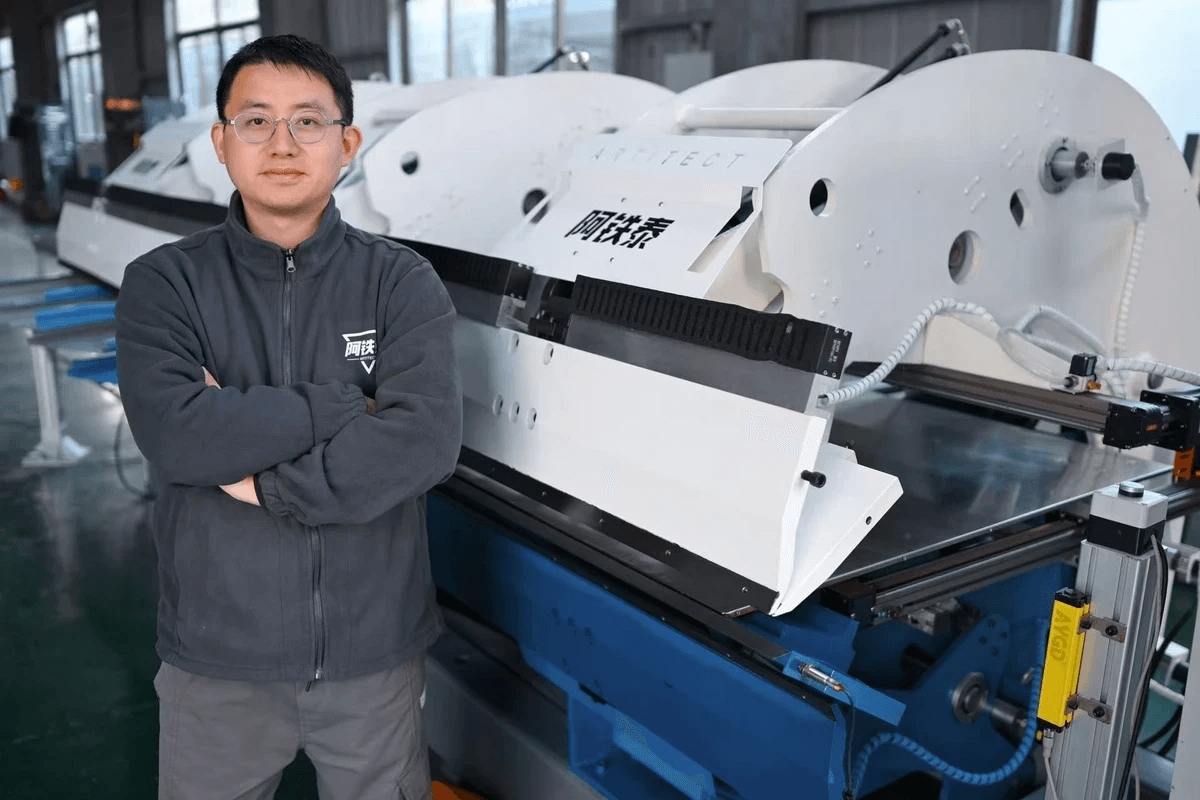
The phrase "double folder" is central to ARTITECT's website. This is useful for buyers because it narrows the conversation. Instead of searching through every possible sheet metal bending machine, the buyer can evaluate a machine class designed around up and down folding, long profile control, and automatic production support.
That is especially relevant in roofing and architectural sheet metal work. Profiles such as fascia, coping, parapet caps, roof-edge trim, cladding details, wall panel components, gutters, and custom architectural shapes often require several bends and careful handling. A double folder can reduce the manual flipping and repositioning that make these parts slow or inconsistent.
Why Up and Down Folding Matters
Many folded profiles need bends in opposite directions. If a machine only supports the process through a conventional sequence, the operator may need to flip or re-orient the material. On short parts that may be manageable. On long, coated, or partially formed parts, it becomes a real bottleneck.
RAS describes up and down bending as a way to avoid material flipping when the bend direction changes. This is one of the core reasons double folder equipment is important for roofing shops. Reducing flips can reduce handling time, surface damage risk, and operator fatigue while improving repeatability.
ARTITECT's Machine Functions in Production Terms
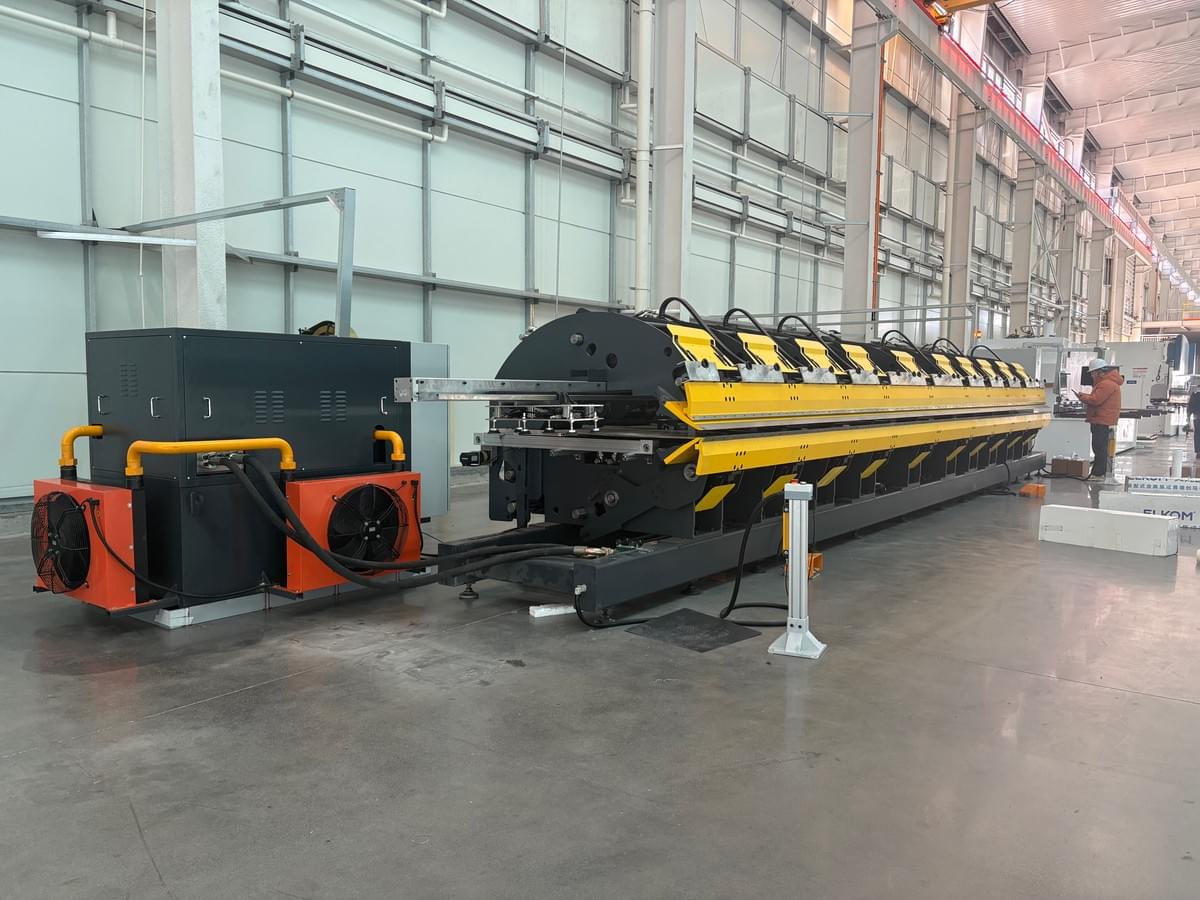
ARTITECT lists several functions that should be understood through their production effect. Synchronized control drive shaft technology supports stable machine movement. Dynamic folding helps multiple axes move together to reduce repositioning and stop time. CNC material thickness adjustment helps the machine adapt to different sheets. Backgauge and material gripper functions support accurate positioning. Automatic sheet loading and support reduce manual handling of long blanks.
These functions are strongest when they work together. A control system is more useful when it can coordinate the backgauge, folding beam, support devices, and material handling options. A support device is more valuable when it helps the operator run the programmed sequence safely and consistently. This is why buyers should evaluate the machine as a workflow system.
Controls Should Make Complex Work Repeatable
ARTITECT describes graphic control EFsys with touch-screen profile programming, automatic folding sequence, and collision simulation. These features are important because roofing and architectural shops often run varied profile work. A shop may change from one trim profile to a parapet cap, then to a wall panel detail, then to a custom part for a specific project.
Good controls reduce the cost of that variety. They help operators understand the sequence, recall repeat jobs, and check whether a part can be folded without collision or awkward movement. RAS also highlights automatic programming and 3D simulation in its bending center materials, showing that control quality is a major theme in advanced folding equipment.
Handling Long Material Is a Core Challenge
Long blanks make folding harder. They require support, accurate squaring, and careful movement. A small shift at one end of a long part can affect the entire finished profile. A coated surface can be damaged if it is dragged or handled too aggressively. A partially formed profile can become awkward as flanges grow during the sequence.
ARTITECT's automatic extendable sheet loading and sheet support, automatic side sheet loading device, and automatic part flipper all address this handling problem. NIOSH guidance on manual material handling notes that ergonomic improvements can reduce physical demands and may improve productivity and quality. In folding work, reducing the handling burden can directly improve output and consistency.
Safety Belongs in the Same Conversation
Automatic folding machines involve moving parts, clamping zones, support systems, and large workpieces. OSHA's machine guarding materials emphasize safeguarding machine parts and processes that may injure operators or nearby workers. Buyers should discuss guarding, safe access, emergency stops, operator position, and training whenever they evaluate a double folder.
Safety does not sit apart from production. A predictable, guarded workflow helps operators follow the correct sequence under time pressure. Clear programming, stable material support, and safe access can all make the production process more reliable.
Who Should Evaluate ARTITECT MACHINERY
ARTITECT is most relevant for buyers whose work is tied to roofing, contracting, facade fabrication, and architectural sheet metal profiles. It may be especially relevant when the shop handles long visible parts, frequent custom profiles, bend-direction changes, and production growth that requires more automation.
- Roofing contractors producing trim, fascia, and coping.
- Architectural sheet metal shops making visible profile work.
- Facade and cladding fabricators that need repeatable bends.
- Shops trying to reduce manual handling of long blanks.
- Buyers comparing double folder automation against basic folder capacity.
How to Start a Productive Conversation
The best way to evaluate ARTITECT MACHINERY is to bring real production information. Buyers should prepare drawings, blank sizes, material types, thicknesses, finish requirements, expected volume, and the problems they want the machine to solve. A vague request for a folding machine will usually produce a vague comparison. A profile-based request leads to a stronger technical conversation.
ARTITECT's About Us page connects its automatic folding machine with production experience and architectural design experience. Buyers can use the contact page to discuss how that experience applies to their own work mix.
What Buyers Should Prepare Before Contacting ARTITECT
The most useful inquiry is specific. Buyers should prepare two or three typical profiles, one difficult profile, and one part they expect to produce more often in the future. They should also note the current handling method, the number of operators required, the material finish, and any recurring quality issue. That information helps connect ARTITECT's functions to actual production instead of leaving the discussion at the level of general machine capacity.
It is also worth identifying which problem matters most. Some shops want speed. Others want fewer operators on long parts. Others need better repeatability for facade work or a clearer control process for training. When the priority is clear, features such as dynamic folding, support systems, tapered backgauge capability, collision simulation, and automatic part flipping can be evaluated in the right order.
Why the Brand Conversation Should Stay Practical
A machinery brand is most valuable when it helps the buyer make a better production decision. For ARTITECT MACHINERY, that means judging the brand through the double folder workflow it promotes. Buyers should ask how the machine would run their profiles, how the control would guide their operators, and how support devices would reduce the movement that currently slows the shop down.
Conclusion
ARTITECT MACHINERY's value is clearest when buyers evaluate it through the double folder workflow. The brand is not positioned around generic bending. It is positioned around automatic folding equipment for roofing and contractor applications where long profiles, controlled handling, bend direction, programming, and repeatability matter.
For buyers who need more than basic sheet metal bending, the next step is to compare real parts against ARTITECT's machine functions. That is where the double folder concept becomes practical: fewer unnecessary moves, better support, clearer control, and a more repeatable path from blank to finished architectural profile.