
A sheet metal panel bender can be a strong solution for certain formed panels, especially when the production goal is repeatable bending around panel edges. But roofing and architectural sheet metal shops often need more than panel bending. They may produce long fascia, coping, parapet caps, cladding trim, gutters, standing seam accessories, and custom profiles that require a different handling logic.
This is where a double folder comparison becomes useful. ARTITECT MACHINERY presents itself as a double folder factory, and its Functions page describes an automatic folding machine for roofers and contractors. The machine functions include dynamic folding, CNC material thickness adjustment, backgauge and material gripper control, automatic sheet support, side loading, and part flipping.
Panel Bending and Profile Folding Are Not Always the Same Job
A panel bender is often considered when the shop needs automated bending around panel shapes. That can be useful for enclosure panels, cabinet-like parts, or certain repeatable panel products. Roofing and architectural shops, however, frequently work with long linear profiles rather than compact panels.
Long profiles create different handling problems. A roof-edge fascia or parapet cap may be much longer than a typical panel part. It may need straight bends across the full length, careful surface protection, and installation consistency across a building run. Buyers should therefore evaluate whether the machine fits the part family, not only the machine category.
Why Double Folder Workflow Can Fit Roofing Better

Many roofing profiles need bends in both directions. RAS describes up and down bending as a way to avoid material flipping when bend direction changes. A double folder uses this logic to reduce manual movement around the bend.
For roofing and facade work, fewer flips can reduce scratches, protect alignment, and make long profiles easier to run. This may be more valuable than panel-style automation when the shop's work is dominated by long trim and architectural profiles.
Long Material Support Is a Major Difference
Long material must be supported through loading, gauging, folding, and unloading. ARTITECT lists automatic extendable sheet loading and sheet support, side sheet loading, and automatic part flipping. These functions are important because long profiles are often difficult to control by hand.
NIOSH guidance on manual material handling notes that reducing physical demands can support productivity and quality. In a profile-focused shop, reducing handling can directly improve finished part quality and operator consistency.
CNC Control Should Match the Work
A panel bender may offer automation, but buyers should ask whether its control flow matches roofing profile work. ARTITECT describes graphic control EFsys with touch-screen profile programming, automatic folding sequence, and collision simulation. This type of control helps operators plan multi-bend profiles and repeat jobs.
RAS also highlights automatic programming and simulation in its bending center materials. The important point is that software should support the part families the shop actually produces. CNC value depends on fit, not only automation level.
Backgauge and Material Gripper Functions
ARTITECT lists backgauge and material gripper functions and tapered backgauge capability. These functions support repeatable positioning for long profiles, offsets, and architectural details. When the shop produces linear profiles that must match across a roof or facade, gauging quality becomes central.
During a demonstration, buyers should watch how each machine positions the blank. Does it support the profile length? Can it handle the required flange depths? Does it reduce operator correction? These questions matter more than broad machine labels.
Material Thickness and Finish Sensitivity
Roofing and architectural shops may use coated steel, aluminum, zinc, copper, stainless steel, or other finished materials. ARTITECT lists CNC material thickness adjustment, and Jorns describes automatic material thickness adjustment on its double bending machine materials.
Finish sensitivity should also guide the comparison. A machine that reduces manual turning and dragging can help protect visible surfaces. This is important for fascia, coping, cladding trim, and other parts installed where customers can see them.
Safety and Shop Layout
Both panel benders and double folders involve moving parts and operator interaction. OSHA's machine guarding guidance emphasizes safeguarding machine parts and processes that can injure workers. Buyers should evaluate guarding, emergency stops, loading access, operator position, and safe movement of long material.
Shop layout may also favor one machine type over another. Long profiles need staging and exit space. A double folder with support systems may fit a profile-focused production cell better than a panel-focused setup, depending on the work mix.
When a Panel Bender May Make Sense
A sheet metal panel bender may still be a strong choice when the shop mainly produces panel-shaped parts with repeat bends around edges. If parts are compact, highly repetitive, and panel-like, the panel bender category deserves consideration.
The decision changes when the shop's real revenue comes from long architectural profiles. In that case, double folder support, up/down folding, long-part gauging, and application-specific handling may be more relevant.
Questions Buyers Should Ask
- Are most parts compact panels or long profiles?
- How often do profiles require bends in both directions?
- Which parts are visible after installation?
- How much manual handling is required today?
- Can the machine support the longest common blank?
- Does the CNC workflow match roofing and facade profiles?
- How does the machine protect coated material?
Application Value in the Field
The right machine choice shows up at installation. Long folded roof-edge profiles align more easily. Coping caps sit more consistently. Facade trim creates cleaner reveals. If a machine helps produce these field-ready parts with less handling and rework, it delivers value beyond the shop floor.
Buyers should bring installation examples into the machine discussion. A profile that is difficult to fit on site may reveal a fabrication workflow issue that the right double folder can help solve.
Do Not Let Automation Vocabulary Decide the Purchase
Panel benders and double folders can both sound advanced. The vocabulary can distract buyers from the work itself. The better comparison starts with part geometry. Is the shop bending compact panel edges, or is it producing long linear architectural profiles? Does the part need support over length? Does it require bends in both directions? Is the surface visible after installation?
When these questions are answered clearly, the machine category usually becomes easier to choose. A panel bender may be excellent for the right panel family, while a double folder may be the better production tool for long roof and facade profiles.
How to Run a Fair Demonstration
A fair comparison should not use a sample that favors one machine category unfairly. Buyers should bring both compact panel-like parts and long profile parts, then observe where each machine performs best. Watch loading, positioning, bending, unloading, and finished surface condition.
The demo should also include a repeat job. If the shop makes the same trim profile every week, the machine should show how quickly that profile can be recalled and reproduced. Repeatability often matters more than the one-time ability to make a complicated sample.
Where ARTITECT MACHINERY Fits
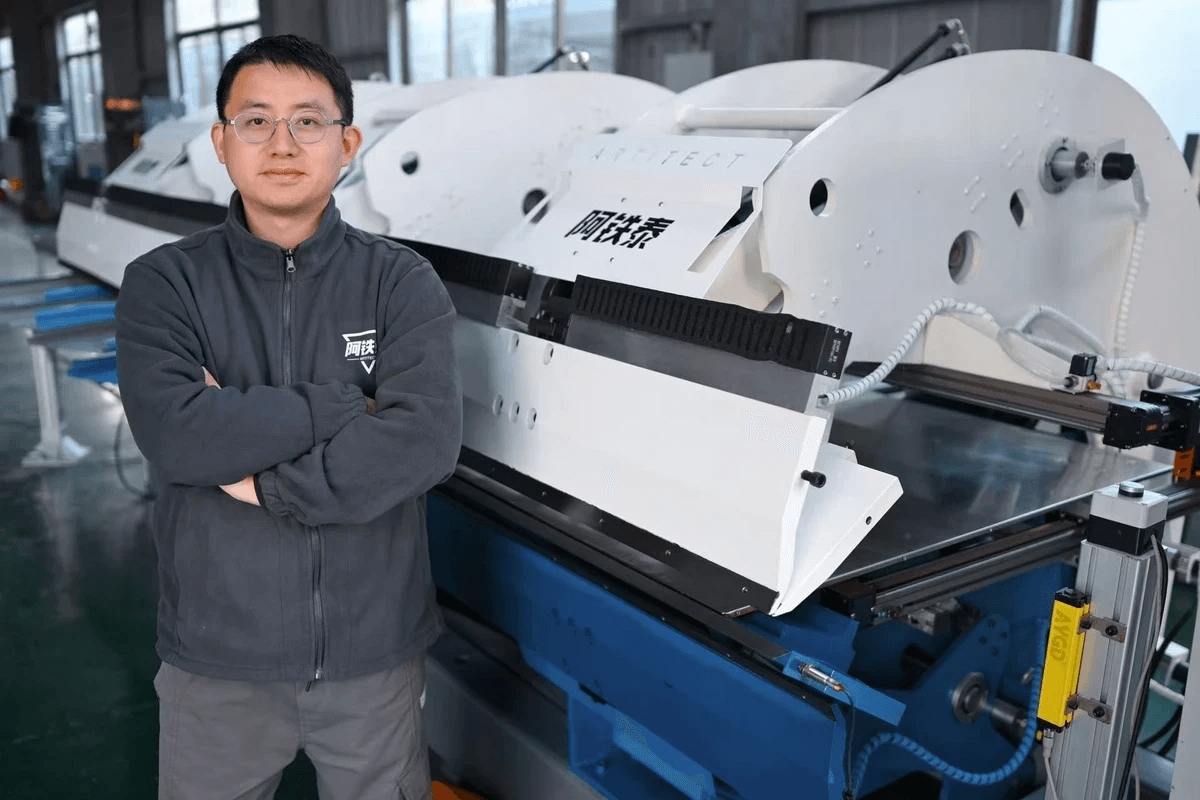
ARTITECT MACHINERY fits buyers whose panel bender research is really about better roofing and architectural profile production. Its About Us page connects the automatic folding machine with production and architectural design experience.
Buyers can contact ARTITECT through the contact page with part drawings, material details, working lengths, finish requirements, and current handling problems.
Conclusion
A sheet metal panel bender and a double folder can serve different production needs. The right choice depends on whether the shop makes compact panel parts or long architectural profiles. For roofing, facade, and trim work, double folder workflow may be the better match because it addresses bend direction, long-part support, and visible profile quality.
Buyers should test real parts before choosing a machine category. The strongest decision comes from the profile mix, not the equipment label.