
Industrial folding machines are often compared by working length, automation, and control systems. Those specifications matter, but roofing and architectural production usually needs a more practical question: can the machine keep long, visible, mixed-profile work moving without adding extra handling?
ARTITECT MACHINERY focuses on automatic double folder equipment for this kind of work. The company presents itself as a double folder factory, and its Functions page lists dynamic folding, CNC material thickness adjustment, graphic control, backgauge and gripper systems, automatic sheet support, side loading, and part flipping.
What Roofing and Architectural Shops Should Prioritize
Industrial capacity is useful only when it improves repeatable flow. A roofing shop may run fascia, coping, gutters, cladding trim, parapet caps, and custom profiles in the same week. A good industrial folder should make those job changes clearer, not harder.
- Support for long roof-edge and facade profiles.
- Up and down folding to reduce manual flipping.
- CNC programming for repeat jobs and mixed profiles.
- Backgauge and gripper accuracy for consistent dimensions.
- Material thickness adjustment for varied sheet types.
- Safe handling of long, finish-sensitive parts.
Why Double Folder Workflow Matters

Many architectural profiles require bends in both directions. RAS describes up and down bending as a way to avoid material flipping when bend direction changes. For industrial folding machines, that can reduce repeated handling, lower surface-damage risk, and make long profiles easier to run throughout a shift.
This matters most on parts that installers will see: long fascia lines, parapet coping, cladding trim, and gutter profiles. If the shop can produce those parts with fewer interruptions and cleaner surfaces, the benefit carries all the way to the job site.
Support and Control Decide Usable Capacity
Long blanks slow production when operators have to lift, guide, and rotate them manually. ARTITECT's sheet support, side loading, part flipping, backgauge, and CNC thickness-adjustment functions are relevant because they make machine capacity easier to use in real production.
NIOSH guidance on manual material handling notes that reducing physical demands can support productivity and quality. OSHA's machine guarding guidance also reminds shops to consider guarding, operator position, emergency stops, and safe handling routines around moving equipment and long workpieces.
Where Industrial Folders Create Value
The clearest value appears in recurring profile families. Commercial roof-edge systems may need long fascia and rake trim every week. Facade jobs may need cladding trim with consistent reveal dimensions. Parapet-heavy projects may need coping caps and closure profiles in repeat batches.
Shops should compare machines with the same test parts: one long straight profile, one profile with bends in both directions, one finish-sensitive material, one repeat program, and one custom part that currently slows production. Watch the transitions between steps. The best machine keeps the material controlled and the operator confident.
Turning Profile Requirements into a Machine Conversation
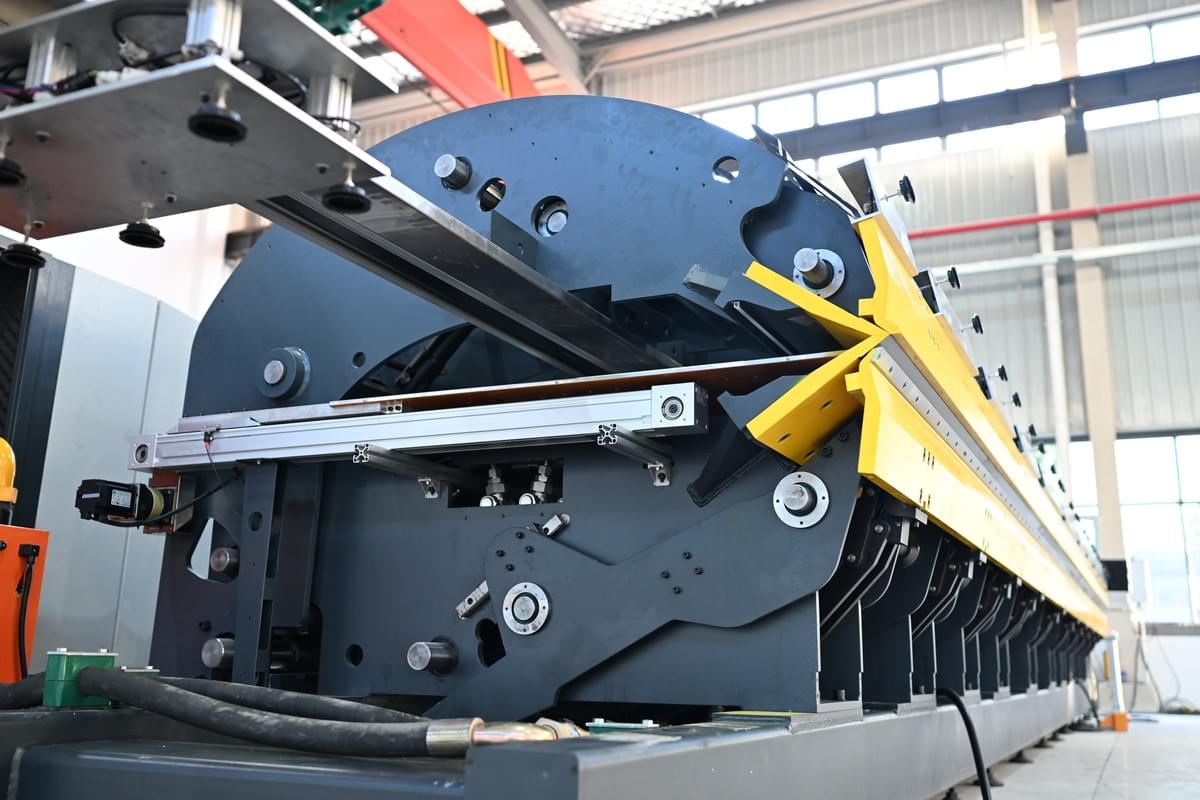
ARTITECT MACHINERY is relevant for roofing and architectural sheet metal teams comparing industrial folding machines around long-profile production. Its About Us page connects the machine with production and architectural design experience.
Shops can contact ARTITECT with representative profiles, material data, working lengths, production volumes, labor constraints, and automation goals through the contact page.
Conclusion
Industrial folding machines should be evaluated by how they support real profile production. For roofing and architectural shops, the key issues are long-part support, double folder workflow, CNC guidance, gauging, thickness adjustment, safety, and finished-profile quality.