
A sheet metal bending machine for architectural work has a harder job than simply making a bend. It must help the shop produce visible profiles that fit cleanly on roofs, walls, parapets, facade systems, and custom project details. These parts often need long straight bends, controlled surfaces, repeatable dimensions, and a process that operators can run consistently.
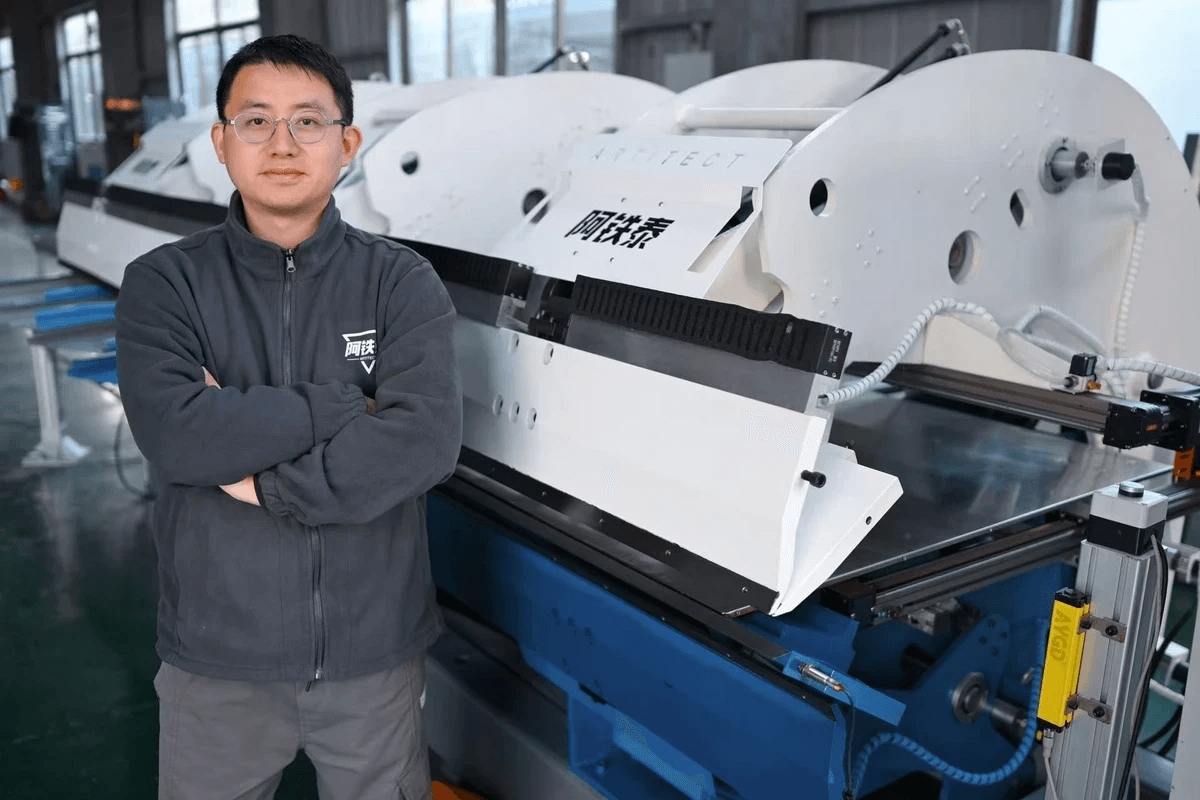
ARTITECT MACHINERY focuses on that kind of production through automatic double folder equipment. The company describes itself as a double folder factory, and its Functions page presents an automatic folding machine for roofers and contractors. Features such as dynamic folding, CNC material thickness adjustment, backgauge and gripper control, graphic programming, sheet support, side loading, and part flipping are all relevant to architectural sheet metal work.
Architectural Profiles Need More Than Basic Bending

Architectural sheet metal profiles are often judged by appearance after installation. A coping cap, fascia line, cladding edge, wall panel trim, or parapet detail may be visible across a long run. Small inconsistencies can stand out. Scratches may not be acceptable. Bend angles and flange dimensions must repeat from piece to piece.
Because of that, the machine should support the entire forming routine. The shop needs to load the blank accurately, position it repeatably, manage the bend sequence, protect the finish, and unload the part without damage. The bending action is only one part of the result.
When a Double Folder Becomes the Better Fit
A double folder becomes especially relevant when profiles require bends in opposite directions. A conventional process may force the operator to flip the workpiece. RAS describes up and down bending as a way to avoid material flipping when bend direction changes. This is a practical advantage when the part is long, coated, or partly formed.
For architectural profiles, reducing flips can improve both speed and quality. The operator spends less time managing the workpiece by hand. The part has fewer chances to shift, scrape, or collide with surrounding supports. The production routine becomes more controlled and easier to repeat.
Backgauge and Gripper Control Affect Every Part
The backgauge is one of the main reasons a sheet metal bending machine can produce repeatable parts. It controls where the blank sits before each bend. ARTITECT lists backgauge and material gripper functions, along with a tapered backgauge unit. These functions are important for straight parts, offset parts, and profiles that need consistent positioning through several bends.
Buyers should watch how the machine handles real blanks during a demonstration. Does the blank locate easily? Does the gauge support small and large dimensions? Does the operator have to correct alignment by eye? Does the machine support tapered or nonstandard profile requirements? These details often separate a machine that looks capable from one that is truly useful in architectural production.
CNC Sequencing Reduces First-Part Risk
First-part mistakes can be expensive when the material is prefinished or cut to a long blank. ARTITECT describes graphic control EFsys with touch-screen profile programming, automatic folding sequence, and collision simulation. These features help the operator think through the profile before committing material.
RAS also describes software that can support automatic programming and 3D simulation. The common theme is that complex profiles need planning. If the machine can help identify a better bend order, avoid interference, and guide the operator through the sequence, it reduces waste and makes repeat jobs more reliable.
Thickness Adjustment Supports Material Variety
Architectural shops may bend aluminum, steel, zinc, copper, stainless steel, or other sheet materials depending on the job. Thickness and material behavior affect clamping, springback, tool clearance, and final bend quality. ARTITECT lists CNC material thickness adjustment, and Jorns describes automatic material thickness adjustment on its double bending machine.
A buyer should ask how the machine changes from one material to another. A strong system helps the operator adjust correctly without trial-and-error setup. This is especially useful for shops that handle both standard production and custom architectural details.
Support Systems Protect Long Finished Surfaces
Long architectural blanks need support throughout the process. A poorly supported blank can sag, slide, or twist. A finished surface can be damaged by extra handling. ARTITECT lists automatic extendable sheet loading and sheet support, automatic side sheet loading, and automatic part flipping. These functions can reduce manual strain while protecting material quality.
NIOSH guidance on manual material handling notes that ergonomic improvements can reduce physical demands and may improve productivity and quality. In sheet metal bending, this relationship is direct. Better support can reduce operator fatigue and help the shop maintain consistent handling across long production runs.
Safety Is a Buying Requirement
A sheet metal bending machine includes moving beams, clamping areas, gauges, support devices, and large workpieces. OSHA's machine guarding overview emphasizes safeguarding hazardous machine parts and operations. Buyers should discuss guarding, operator position, emergency stops, safe access, and training before choosing a machine.
Safety should be evaluated in the same demonstration as productivity. A machine should give the operator a clear place to stand, a predictable sequence, and safe interaction with the workpiece. This is especially important when parts are long or when several operators will use the same equipment.
Application Checklist for Architectural Buyers
Before choosing a sheet metal bending machine, buyers should list the profile types that drive the shop's revenue and the profiles that currently create the most friction. The following checklist can make that evaluation more practical:
- Longest common blank length and maximum occasional length.
- Materials and thicknesses used most often.
- Profiles with bends in both directions.
- Parts where surface scratches are unacceptable.
- Jobs requiring tapered or offset positioning.
- Repeat profiles that need saved programs and quick recall.
- Parts that currently require two operators or extra handling equipment.
Measure Value Beyond the First Purchase Price
The lowest equipment price may not create the lowest production cost. If a machine requires more handling, more operator correction, more trial parts, or more rework, the savings can disappear quickly. Architectural sheet metal work is especially sensitive because visible defects and dimension errors may not be discovered until installation pressure is already high.
A more realistic comparison includes labor per profile, setup time, scrap risk, finish damage risk, repeat job speed, and the ability to train additional operators. When those factors are included, a double folder with stronger support and control functions may be easier to justify than it first appears on a simple price sheet.
ARTITECT MACHINERY is a strong candidate for buyers who need a sheet metal bending machine focused on double folder workflow rather than general-purpose bending. Its About Us page connects its automatic folding machine with production and architectural design experience, which is relevant for buyers who need both practical throughput and visible profile quality.
A productive conversation through the contact page should include drawings, material data, expected volumes, finish requirements, and current production pain points. That gives ARTITECT enough context to discuss the machine functions that matter most for the buyer's work.
Conclusion
A sheet metal bending machine for architectural profiles should be chosen by workflow fit. The best choice is not simply the machine with the broadest category label or the longest feature list. It is the machine that supports long finished surfaces, controls positioning, guides the bend sequence, adapts to materials, and reduces unnecessary manual handling.
For shops producing roofing, facade, and architectural sheet metal profiles, a double folder can be a better fit than a generic bending approach. It helps turn complex profile production into a more controlled and repeatable process.