
A folding machine with slitting unit is often discussed as a way to connect blank preparation with folding workflow. For roofing and architectural sheet metal shops, the practical question is how cutting, staging, folding, inspection, and delivery work together. A clean fold cannot fully rescue a poorly prepared blank.
ARTITECT MACHINERY's published focus is automatic folding and double folder workflow, shown in its double folder factory overview and automatic folding machine function guide. If a shop is comparing slitting and folding options, the useful discussion should stay centered on the profile package and material flow rather than assuming every feature belongs in one unit.
Blank Prep Sets the Folding Result
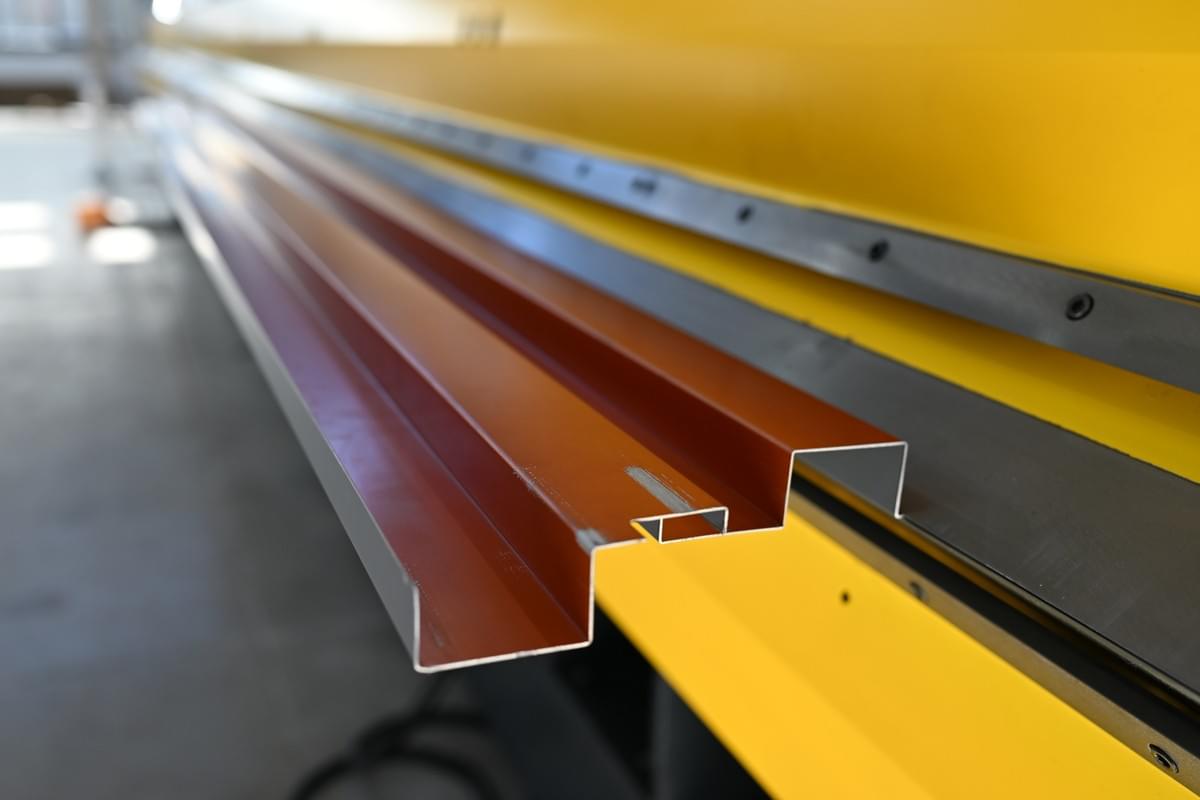
Long roof and facade profiles depend on consistent blank width, clean edges, and careful surface handling before folding begins. If blanks vary, flanges vary. If surfaces are dragged during prep, the defect follows the part to the building.
Profiles That Need Good Prep
- Fascia and rake trim with long visible faces.
- Parapet coping caps with repeat flange dimensions.
- Cladding reveals and facade closure profiles.
- Gutter and drainage profiles that must align cleanly.
- Custom project profiles produced in repeated sets.
Think About Flow Between Steps
Whether slitting and folding are integrated or handled in separate steps, shops should ask how material moves. Are blanks protected between operations? Are project groups kept together? Are repeat dimensions checked before the next step? The answers affect quality as much as headline specifications.
OSHA machine guarding guidance and NIOSH material handling guidance both support a practical review of operator interaction, material movement, and safe handling. Those questions belong in any profile-production discussion.
What to Review Before Buying
Use actual project parts to review the workflow. A shop should not evaluate slitting or folding in isolation if the daily work is architectural profiles.
- How are blanks protected after cutting or staging?
- Can repeat blank widths be held for profile sets?
- Does the folding workflow tolerate normal material variation?
- Can operators keep project parts grouped through inspection?
Discussing Profile Prep with ARTITECT
When contacting ARTITECT, share blank preparation methods, profile drawings, material widths, thicknesses, finish types, and current problems through the ARTITECT project consultation form. That gives ARTITECT context to discuss how automatic folding fits into the larger production flow.
Conclusion
For architectural sheet metal shops, a folding machine with slitting unit should be evaluated as part of the whole profile-prep workflow. The strongest result is not just faster processing. It is clean blanks, repeat profiles, protected surfaces, and finished parts that install without avoidable correction.