
A hydraulic sheet metal folding machine should not be judged only by the word hydraulic. Hydraulic movement can support strong and stable machine action, but roofing and architectural sheet metal shops still need to ask a bigger question: does the machine improve the whole profile workflow? The best machine must handle long blanks, visible finishes, bend-direction changes, material variation, and operator safety.
ARTITECT MACHINERY's automatic folding machine positioning is useful because it connects machine functions to practical production. The company presents itself as a double folder factory, and its Functions page lists hydraulics alongside dynamic folding, CNC material thickness adjustment, synchronized control drive shaft technology, backgauge and gripper systems, graphic control, sheet support, side loading, and part flipping.
Hydraulics Are One Part of a Larger System
Hydraulic systems are often associated with power and controlled force. In folding work, that matters, but force alone does not determine whether a machine is right for roofing production. A long fascia or parapet cap does not only need power. It needs positioning, support, repeatable bend sequence, and careful handling.
Buyers should therefore evaluate how the hydraulic function works with the control system, frame, gauges, folding beam, and support devices. A strong hydraulic action is most valuable when the rest of the machine keeps the blank stable and the operator informed.
Double Folder Design Reduces Manual Movement

Many roofing and architectural profiles include bends in both directions. A machine that forces the operator to flip a long part between bends can create labor, quality, and safety problems. RAS describes up and down bending as a way to avoid material flipping when bend direction changes.
For a hydraulic sheet metal folding machine, this means buyers should look beyond the drive method. If the shop produces profiles with alternating bend directions, double folder architecture may matter more than whether the machine is described primarily as hydraulic.
Long-Part Support Makes Capacity Usable
A working length is only useful if the shop can control material at that length. Long blanks can sag or twist. A coated sheet can scratch if it is dragged or lifted repeatedly. ARTITECT's automatic sheet support, side loading, and part flipping functions help reduce those handling problems.
NIOSH guidance on manual material handling notes that reducing physical demands can support productivity and quality. In roofing fabrication, this means support devices can make long-part bending more consistent and less tiring, especially during repeat production.
CNC Thickness Adjustment and Hydraulic Control
Hydraulic machines still need accurate setup. Material thickness affects clamping, tool position, and bend behavior. ARTITECT lists CNC material thickness adjustment so clamping tooling can be positioned according to the sheet. Jorns also describes automatic material thickness adjustment on its double bending machine materials.
A buyer should ask how thickness changes are handled. Does the control guide the operator? Does the machine reduce overpressure risk? Can different materials be run without excessive trial pieces? These questions reveal how well hydraulic action is integrated into the machine workflow.
Backgauge and Gripper Systems Remain Critical
The backgauge controls the physical location of each bend. ARTITECT lists backgauge and material gripper functions, plus tapered backgauge capability. For roofing profiles, this positioning is essential because several parts may need to match across a long roof edge or facade run.
During a demonstration, buyers should watch whether the operator can place the blank confidently. If the blank requires constant manual correction, the machine may not provide the repeatability the shop needs, even if its hydraulic system is strong.
Safety Around Hydraulic Folding Equipment
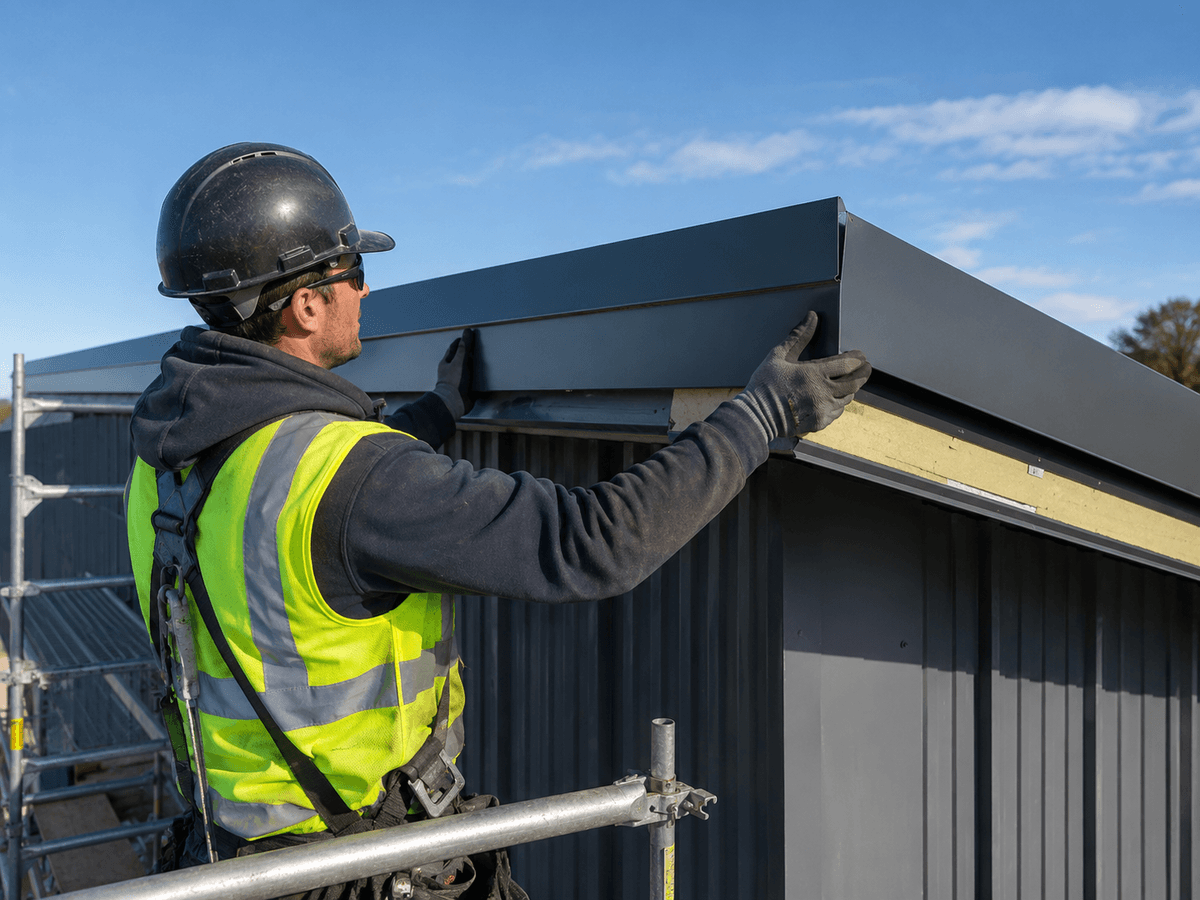
Hydraulic folding equipment includes moving beams, clamps, and workpieces that can create hazards. OSHA's machine guarding guidance emphasizes safeguarding machine parts and processes that can injure workers. Buyers should discuss guarding, emergency stops, operator position, maintenance access, and safe handling of long material.
A safe process should also feel predictable. Operators need to know how the machine will move and where the material will go. Good controls and support devices reduce improvisation around powerful machine motion.
Application Fit in Roofing and Facade Work
The strongest use cases for a hydraulic sheet metal folding machine are often long, repeatable, finish-sensitive profiles. Roofing and facade shops should test:
- Long fascia and roof-edge trim profiles.
- Parapet caps and coping profiles.
- Cladding trim with coated surfaces.
- Gutter or box gutter shapes.
- Profiles with bends in both directions.
- Mixed material jobs requiring thickness changes.
Application Results Buyers Should Expect
The right machine should make finished profiles easier to install. Roof-edge parts should line up cleanly. Parapet caps should sit consistently. Facade trim should maintain crisp reveal lines. These results come from machine stability, repeatable positioning, and reduced handling damage.
Buyers should ask how the machine supports these downstream results, not only how it performs during a factory demonstration. A profile that looks good at the machine but is hard to repeat may still create field problems.
Maintenance and Uptime Questions
Hydraulic equipment should be evaluated with maintenance in mind. Buyers should ask how routine checks are performed, how operators monitor abnormal behavior, and how accessible key service points are. A machine that is difficult to maintain can lose the productivity advantage it promised during the buying stage.
Uptime also depends on how well the machine avoids misuse. CNC material thickness adjustment, clear controls, and reliable support can reduce operator error that might otherwise stress the machine. The maintenance conversation should therefore include both mechanical service and day-to-day operating discipline.
Hydraulic Power Should Feel Controlled
Power is useful only when it is controlled. In roofing and architectural work, the goal is not force for its own sake. The goal is a clean bend on a long or visible profile. Buyers should ask how the hydraulic system interacts with the clamping beam, folding beam, and control program through the full sequence.
When hydraulic movement is paired with stable gauging and good support, the operator can focus on profile quality. When power is not paired with workflow control, the shop may still struggle with inconsistent handling, scratches, or setup delays.
Compare the Machine Against Common Materials
A good test should include the materials the shop actually uses. Coated steel, aluminum, zinc, copper, and stainless steel may behave differently under clamping and folding. A hydraulic sheet metal folding machine should show how it handles those differences without forcing the operator into repeated trial bends.
This is especially important for contractors who move between standard trim and higher-value architectural materials. The machine needs to protect both throughput and surface quality.
Look at Energy, Heat, and Daily Operating Rhythm
Hydraulic equipment should also be discussed in terms of daily rhythm. Buyers can ask how the machine behaves during longer runs, how operators monitor hydraulic performance, and how the supplier recommends routine checks. These details matter because roofing shops often run batches of long profiles under tight delivery schedules.
The goal is a machine that feels stable throughout the day. If operators trust the machine movement and support systems, they can keep attention on profile quality, inspection, and staging for installation.
Where ARTITECT MACHINERY Fits
ARTITECT MACHINERY is relevant for buyers comparing hydraulic sheet metal folding machines because its double folder positioning connects hydraulics to a broader production workflow. Its About Us page connects the machine with production and architectural design experience.
Buyers can use the contact page to share profile drawings, materials, thicknesses, lengths, finish requirements, and handling problems.
Conclusion
A hydraulic sheet metal folding machine should be evaluated as a complete production system. Hydraulics matter, but so do double folder bend direction, CNC setup, backgauge control, long-part support, safety, and application fit.
For roofing and architectural shops, the strongest machine is the one that turns hydraulic capability into cleaner, more repeatable profile production.