
A CNC sheet metal bending machine can look attractive because it promises accuracy, stored programs, and better control. For roofing and architectural sheet metal shops, however, CNC is only valuable when it improves the full production routine. A profile is not finished by one bend. It moves through loading, gauging, clamping, bending, support, bend-direction changes, unloading, inspection, and often installation on a visible building edge.
ARTITECT MACHINERY focuses on this broader workflow. The company presents itself as a double folder factory, and its Functions page describes an automatic folding machine for roofers and contractors. Functions such as graphic control, automatic folding sequence, collision simulation, CNC material thickness adjustment, dynamic folding, backgauge and material gripper control, sheet support, side loading, and part flipping all connect CNC to real sheet metal production.
CNC Must Control the Process, Not Only the Angle

Many buyers start by asking whether a machine has CNC control. A better question is what the CNC actually controls. Does it guide the operator through the bend sequence? Does it support collision checking? Does it connect to the backgauge? Does it help with material thickness changes? Does it make repeat jobs easier to recall? If CNC does not reduce uncertainty in the shop, its value is limited.
Roofing profiles often repeat across a project. Fascia, coping, parapet caps, cladding trim, and roof-edge components may need to match across multiple lengths. A clear CNC process helps the operator produce that repeatability without rebuilding the job from memory every time.
Why Double Folder Architecture Changes the Decision
A CNC bending machine can still leave the operator with too much manual work if the machine architecture does not fit the profile. Many architectural parts need bends in both directions. RAS describes up and down bending as a way to avoid material flipping when bend direction changes. That is a practical reason to compare a CNC double folder against broader bending options.
Reducing flips matters because long, coated, or partly formed parts are easy to damage. Each manual rotation can add time, require a second person, or create surface risk. A double folder can keep more of the sequence inside a controlled machine workflow.
Long-Part Support Determines Daily Usefulness
A machine may have strong CNC features and still be difficult to use on long blanks. Long sheet metal flexes and magnifies small placement errors. Once a profile has several bends, it may become awkward to hold safely. ARTITECT's automatic extendable sheet loading and sheet support, side loading, and part flipper functions are important because they reduce the operator's handling burden.
NIOSH guidance on manual material handling notes that reducing physical demands can support productivity and quality. In a roofing shop, that means support systems are not just comfort features. They help operators keep profiles straight, consistent, and clean through the production run.
Backgauge and Gripper Control Turn CNC into Accuracy
The backgauge is where the digital program meets the physical blank. ARTITECT lists backgauge and material gripper functions and tapered backgauge capability. These functions help position the sheet consistently across straight, offset, or tapered architectural work.
Buyers should watch the gauging process during a demo. Does the operator place the blank easily? Does the machine hold the part where the program expects it? Does the gauge support small flanges and longer depths? If positioning remains manual and uncertain, CNC control will not deliver full value.
Material Thickness Adjustment Reduces Setup Risk

Roofing and architectural shops may move between coated steel, aluminum, zinc, copper, stainless steel, and other materials. Thickness and stiffness affect clamping and folding behavior. ARTITECT lists CNC material thickness adjustment, and Jorns describes automatic material thickness adjustment on its double bending machine materials.
A controlled thickness adjustment process helps the operator move between jobs with less trial and error. It also helps protect the machine and tooling because the setup is not based only on informal judgment.
Safety and Sequence Clarity
CNC does not remove the need for safe operation. OSHA's machine guarding guidance emphasizes safeguarding machine parts and processes that can injure workers. A CNC sheet metal bending machine includes moving beams, clamping zones, gauges, support devices, and long sheets extending through the work area.
Good control design supports safety by making the next step clearer. The operator should know where to stand, how the part will move, and when the machine will act. That predictability is especially important when several operators use the same machine.
Application Tests Buyers Should Run
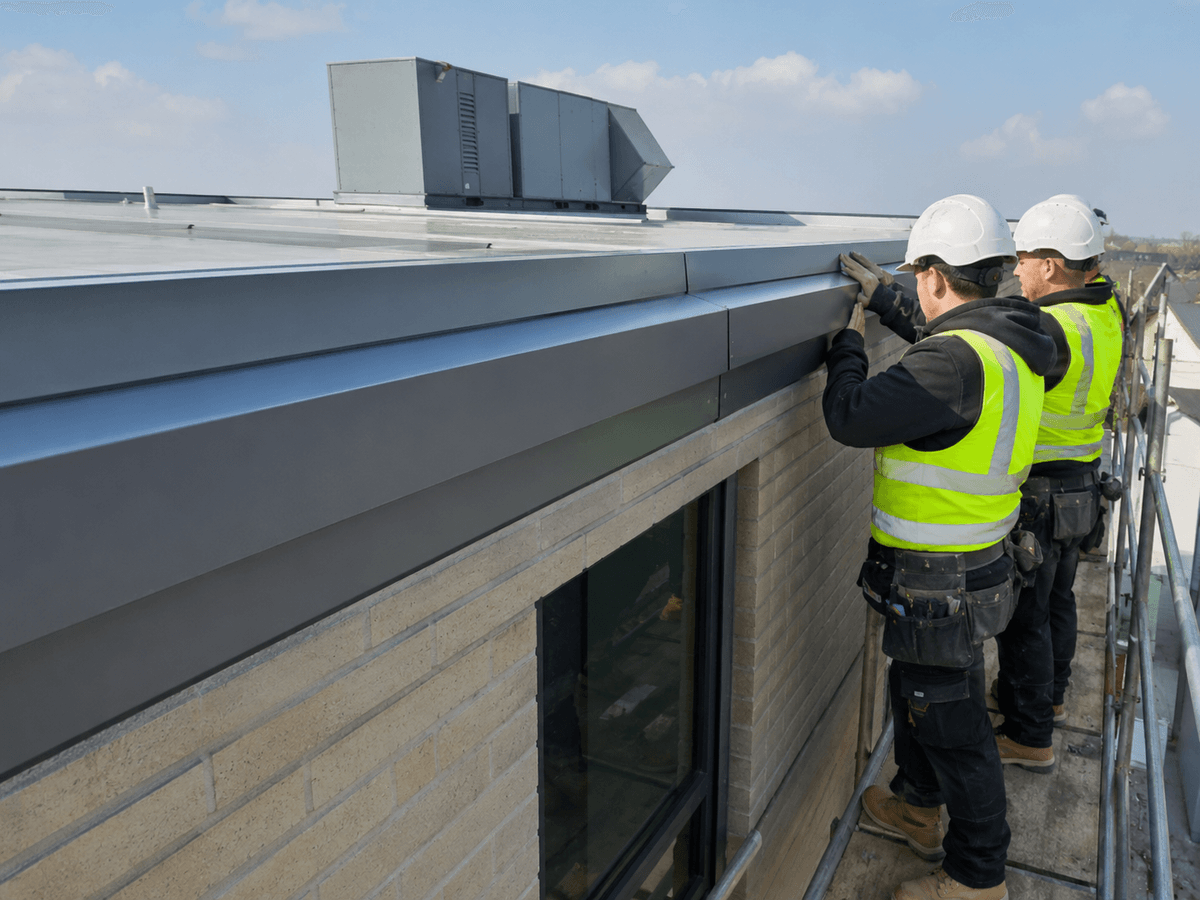
A useful demonstration should include real roofing and architectural profiles, not only a short sample bend. Buyers should test:
- A long fascia or rake trim profile for roof-edge work.
- A parapet cap or coping profile with several bends.
- A cladding trim part with visible coated surfaces.
- A profile with bends in both directions.
- A repeat job recalled from the CNC control.
- A material change that shows thickness adjustment behavior.
Application Scenes That Reveal Machine Value
The value of a CNC sheet metal bending machine becomes visible after fabrication. A straight fascia line is easier to install. A parapet cap with consistent flanges sits more cleanly on the wall. Cladding trim with clean bends creates sharper reveal lines. These field results depend on machine control inside the shop.
Buyers should therefore connect the machine demo to installation outcomes. Ask whether the machine helps produce profiles that installers can align quickly, inspect confidently, and repeat across the project. That connection keeps the purchase focused on business value rather than only machine features.
Production Data Worth Tracking
Before investing, shops should track a few practical numbers from current production. How long does it take to set up a repeat profile? How many people are needed to run the longest parts? How often are first pieces scrapped because of sequence mistakes? How often are finished profiles touched up before delivery? These numbers make the CNC discussion more concrete.
After a machine demonstration, compare the proposed workflow against those same numbers. If CNC programming reduces setup time, if support devices reduce the need for a second operator, or if simulation prevents a wrong bend, the value becomes easier to explain. This is especially helpful when managers need to justify a double folder investment to owners or finance teams.
How to Avoid Overbuying or Underbuying
Some buyers overbuy because they chase every available automation option. Others underbuy because they focus only on the lowest purchase price. The better approach is to identify the profile families that create most of the shop's difficulty. If the hard parts are long, coated, and multi-bend, then support, CNC sequencing, and double folder capability deserve priority.
Optional features should be judged by use frequency. A function used every day on fascia, coping, or facade trim can pay for itself faster than a feature used only on rare special parts. This keeps the machine configuration grounded in real work.
Where ARTITECT MACHINERY Fits
ARTITECT MACHINERY is relevant for buyers who want CNC bending to support double folder production. Its About Us page connects the machine with production and architectural design experience, which fits shops making visible roof and facade profiles.
A focused inquiry through the contact page should include profile drawings, blank lengths, materials, thicknesses, finish requirements, current bottlenecks, and expected repeat jobs.
Conclusion
A CNC sheet metal bending machine should be judged by how well CNC improves the whole profile workflow. For roofing and architectural production, the strongest machine is one that connects programming, gauging, thickness adjustment, support, and double folder bend-direction control.
When CNC reduces handling, protects long finished parts, and makes repeat work easier, it becomes more than a control screen. It becomes a practical production advantage.