
A sheet metal brake changeover is complete when the next operator can make and verify the first part of the new job. Choose two approved profiles, record the setup differences and observe the transition in both directions. Review the drawing, settings reference and first-part result together so that the trial shows how the shop would release each job after a real changeover.

ARTITECT automatic double folder on a factory floor. Source: ARTITECT’s machine demonstration.
Define two jobs and a handoff
Choose two released profiles that the shop expects to run on the same equipment. Designate one as job A and the other as job B. List the settings, tooling or supporting components the operator expects to change. Write down the drawing revision and one clear condition for first-part acceptance for each job. The goal is to compare two distinct setups, so do not adjust the drawings just to make the demonstration easier.
Give the first operator job A and have a second operator prepare job B using the normal handoff information. Set the material for each next to its labelled drawing. Record which instructions the new operator actually needs before touching the setup. A sheet metal brake trial can be dimensionally successful and still depend on a demonstrator supplying verbal instructions that the shop would not have later.
Break the handoff into information, tooling, stock and acceptance. In the information field, put the drawing and program references. In tooling, identify the setup items to be changed according to the supplier procedure. Use the stock field to record the accepted material, and the acceptance field to say when the first part is ready to check. Ask the observer to note any dependency that belongs to more than one owner.
Observe the change before approving the first part
Start the first sheet metal brake changeover with the accepted last piece of job A. Mark the transition start and finish in terms the shop can repeat. For example, use the moment job A is released to stop and the moment the first job B part passes the agreed check. Keep waiting or searching time visible if it exposed a missing handoff item. Do not treat the single observed time as a standard for every change.
Have the operator confirm the job B identifiers, change the allowed settings or fixtures under the equipment supplier’s procedure and verify the setup references. Check which source proves the selected revision, such as the manufacturing record that identifies the accepted program. A first part can look similar to a previous version while differing in a feature that matters to assembly. Give the operator a way to confirm the revision before running repeat pieces.
Review ARTITECT’s automatic double folder machine functions in the context of the operations that change between jobs. Ask the supplier to demonstrate how the proposed equipment supports the release procedure. Observe how the operator identifies the change, where the confirmed reference is recorded, and how the first piece is presented for a check. Record actions and results without treating a vendor option as standard on every configuration.
Compare the first part with the released drawing
Use the long profile handling guide to prepare profile-specific support checks. For this changeover, identify which first-part dimensions have to be rechecked after a setup changes. Before the demonstration, mark measurement positions on the drawing. Choose consistent points near both ends and in the middle where the drawing or fit criteria call for them. Identify the relevant bend angles, flange dimensions and open or closed dimensions. Agree on where the part will sit when being measured so that one reading is comparable with the next.
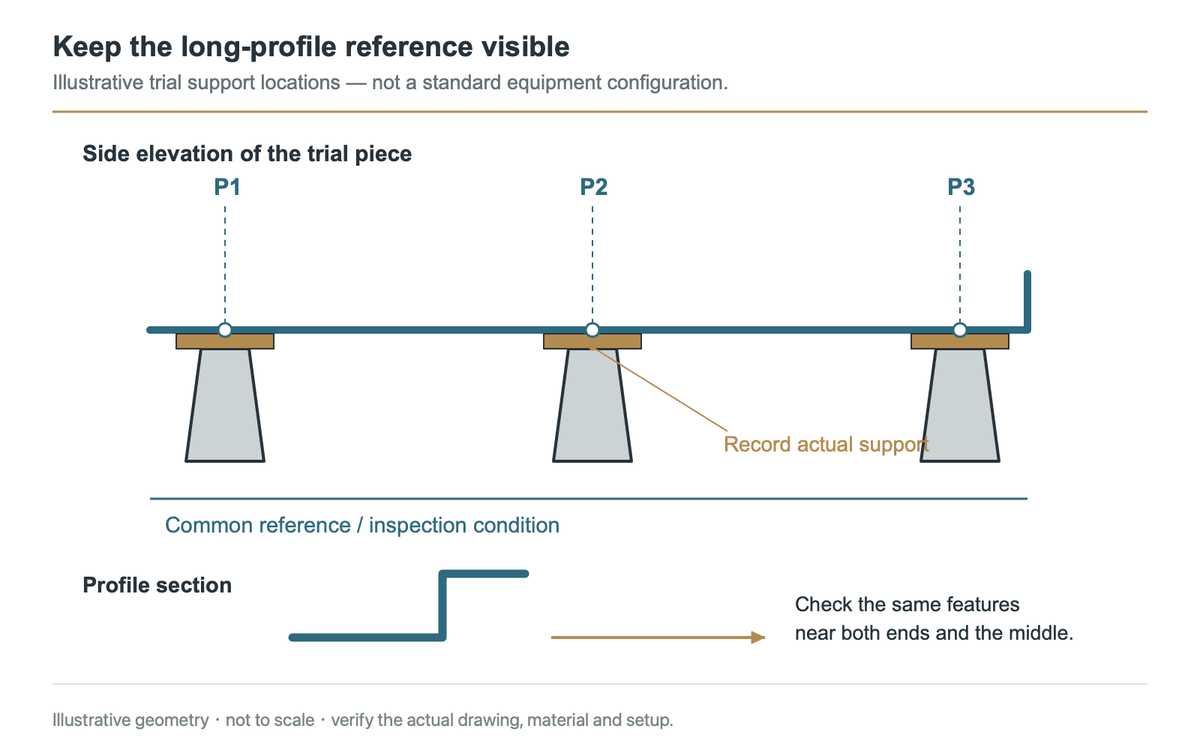
Illustrative support and measurement positions. Use the support arrangement and inspection conditions agreed for the actual profile and quoted equipment. Click image to enlarge.
During the sheet metal brake changeover, record the first acceptable sample and a repeat sample on separate lines. Indicate whether the same settings and handling procedure were used. A discrepancy between locations can prompt a check of alignment, support or measuring conditions. Confirm the cause with the supplier before applying a correction beyond the sample.
Include a mating panel, sample fastener or installation template if it answers a specific fit question. The inspection sheet should distinguish what was measured on the profile from what was observed during the fit check. That helps explain why a dimension matters when an operator sees the form again on a different job.
Work through a representative shop example
Imagine a shop with a frequently repeated roof trim and a longer profile used around an opening. The first piece is easy to load and measure. The longer piece needs extra support while being located, and its last fold puts the trimmed edge behind a return. The shop observes the switch from the short profile to the longer one, then repeats the switch back to the original job before accepting the proposed sheet metal brake arrangement.
On the first trial, the longer profile fits one sample panel but varies at the middle measurement point. The team checks the support and location at that part of the sequence before proposing changes to the drawing. It records the method for presenting the blank, then repeats the run under the agreed conditions. The second trial answers whether the new setup is repeatable on comparable stock.
The supplier and shop sign the measured results together. If the trial was limited to one profile or one particular material, they record that boundary beside the sample. A later job can then be compared against what was actually tested instead of assuming the same result applies to every profile in the shop.
Write a setup change into the acceptance record
Use a short sheet metal brake acceptance record with the machine configuration, drawing, material, support arrangement and method of positioning. Keep the sequence and each measured feature beside the sample identifier. Put any exceptions in their own fields so the next person can distinguish an unfinished test from an accepted condition.
Include one changeover in the demonstration if the shop expects frequent adjustments between jobs. Ask the operator to describe which references or support conditions change and what is checked before the first part of the next run. Verify the first profile independently of the previous job. A clear handoff makes it possible for the next shift to follow the same method.
Capture the equipment decision in terms your buyer can compare. For example, identify which profiles were physically demonstrated, which require additional trials and which would use separate equipment. Keep availability of parts, operating procedures and training questions with the intended configuration. A repeatable trial should result in a short list of observable conditions the buyer can request.
Keep one repeat sample with the decision
A sheet metal brake test should leave a sample that another person can identify and measure. Put the trial record number on the part or its packaging. Note any material or finish difference between the sample and the planned work. Preserve a photo of the datum and the inspection points if the representative part must be returned.
When two suppliers demonstrate a sheet metal brake or related machine, plan the checks around the same drawing and sample stock. Record which equipment and support arrangement each supplier used. This keeps a clear trail from the buyer’s sheet metal brake requirement to the observed result and the quoted configuration.
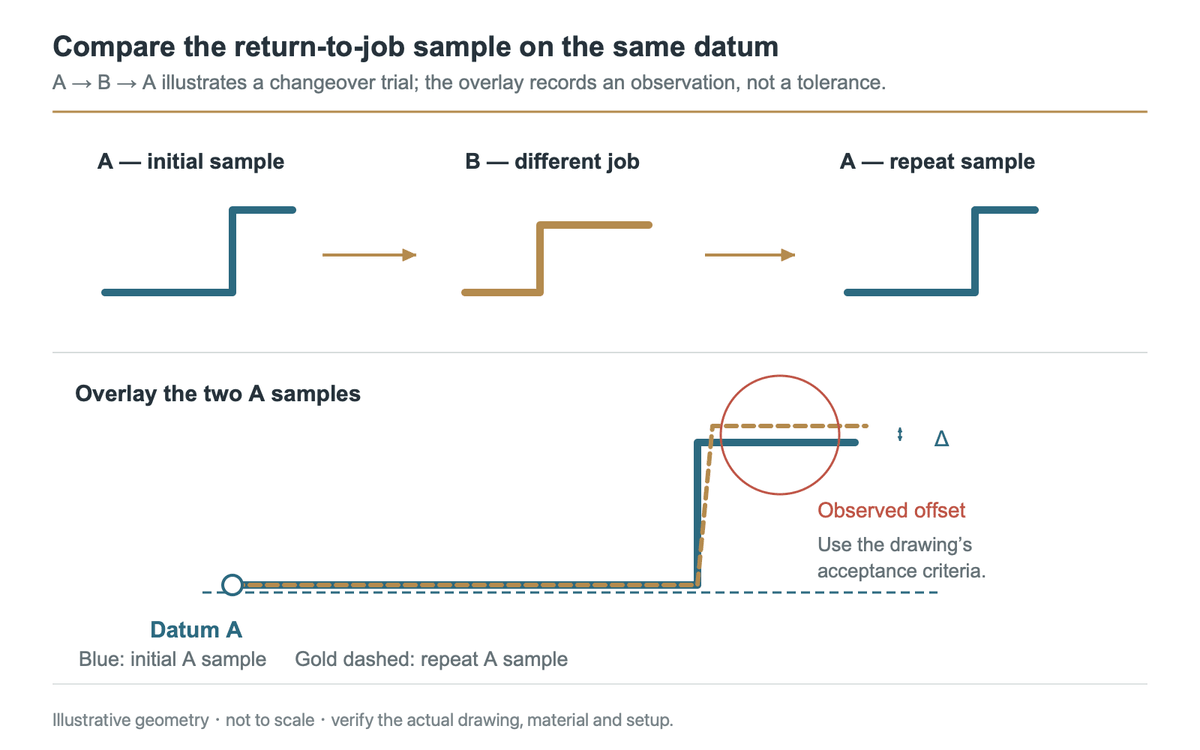
Illustrative A–B–A trial and sample overlay. Record the actual setup revision and judge differences against the released drawing, not the illustrated offset. Click image to enlarge.
Questions about a sheet metal brake trial
When should the first part be released after a changeover?
Release it after the operator confirms the new job revision, verifies the setup reference and records the agreed measurements or fit result. If a check fails, keep the first part with its record and repeat the affected setup checks before running further pieces. Keep the release owner visible on the record.
What should a shop bring to a sheet metal brake demonstration?
Bring the current drawings, representative blanks and any mating part that the sample needs to fit. Include the material specification, bend sequence, maximum working lengths and dimensions that control acceptance. Ask the supplier to explain which equipment configuration and support arrangement are used in the test.
How should a shop compare two demonstrations?
Use the same drawings, representative material and acceptance points for both. Record loading, support, references, handling through each operation and final measured results. Keep setup differences visible, especially where a demonstration uses different tooling or manual support. Carry any resulting questions into the quoted configuration and repeat the affected test where needed.
Use the sheet metal brake trial to capture how a real profile is supported, positioned and measured through the full sequence. Bring the recurring profiles, the difficult long part and the fit checks to a discussion about architectural folding equipment.