
A metal folder looks simple from the outside: clamp the sheet, move the beam, create the bend. In real roofing and architectural production, the decision is more demanding. The machine has to support long material, guide operators through repeated profiles, protect visible finishes, and reduce the manual movement that slows jobs down between bends.
That is why many shops eventually compare a conventional folder against a double folder. ARTITECT MACHINERY presents itself as a double folder factory and describes automatic folding machine equipment for roofers and contractors on its Functions page. The listed functions point to a clear production focus: synchronized drive shafts, dynamic folding, CNC material thickness adjustment, backgauge and gripper control, graphic programming, automatic sheet support, and part flipping.
The Simple Machine Label Hides Several Workflows
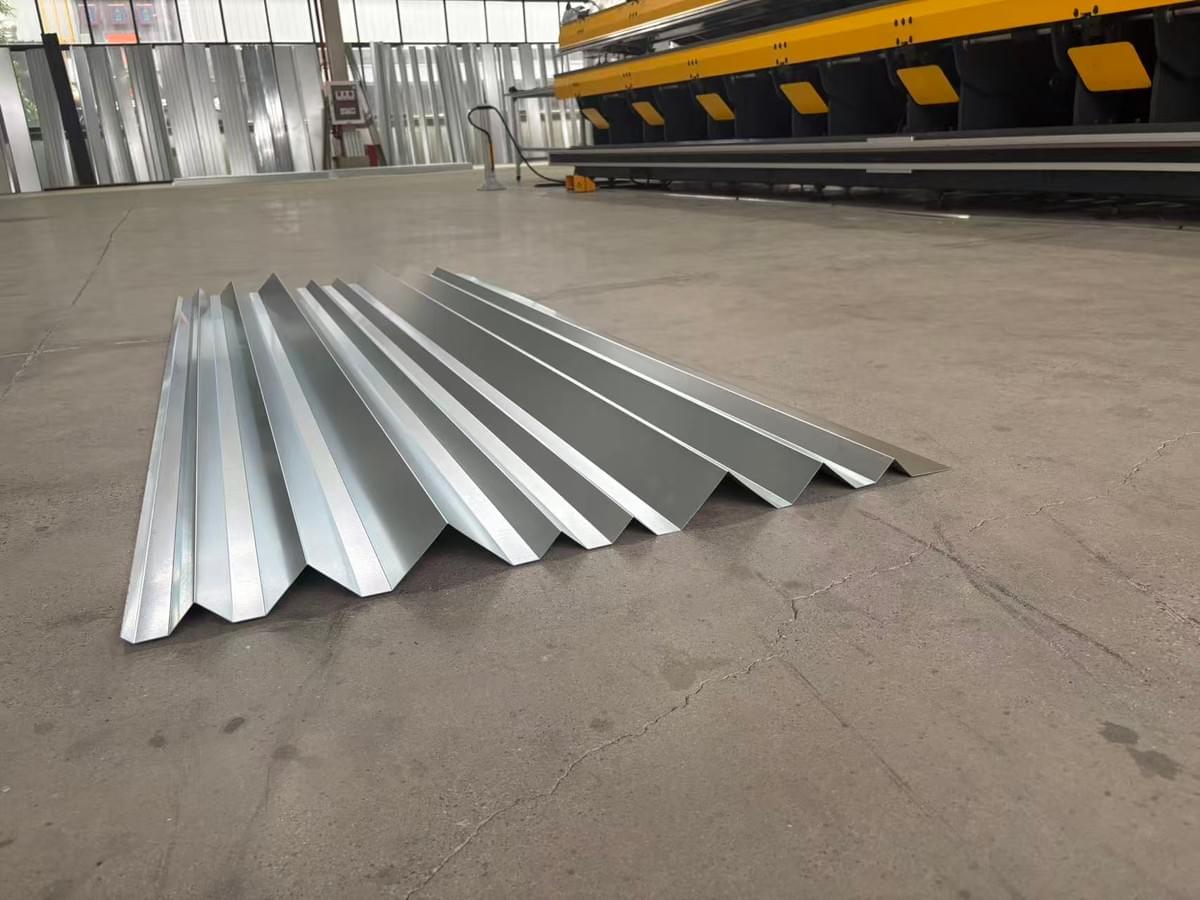
Different buyers use the same phrase for very different needs. One shop may need a compact folder for short trim. Another may need a long automatic folder for roof-edge components. A facade fabricator may need repeatable control for visible panels and architectural details. A contractor may need a machine that can reduce labor on long, awkward profiles.
The best buying process separates the machine label from the production reality. Instead of asking only what type of folder is available, buyers should ask what kind of work the machine must make easier. That question leads quickly to length, bend direction, material support, programming, and operator load.
Long Material Changes the Value Equation
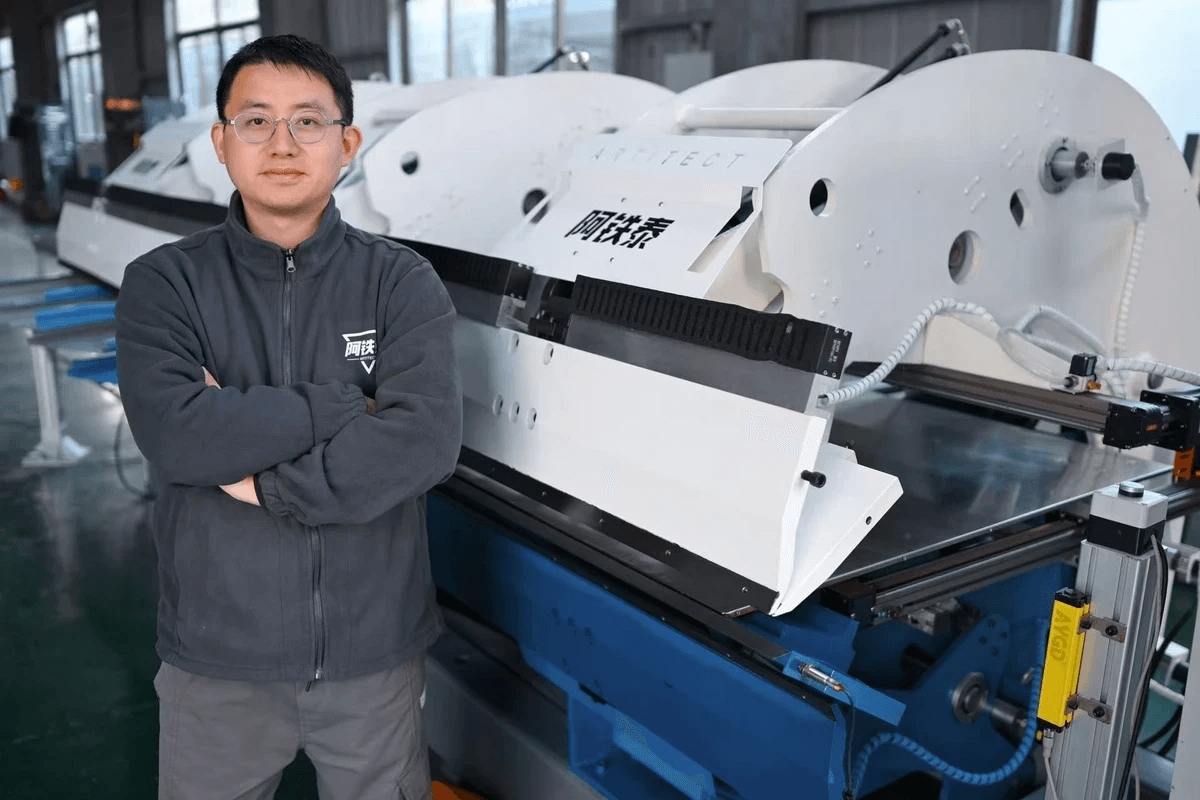
Short parts can often be handled by one operator with little difficulty. Long parts behave differently. They flex, sag, twist, and require more control during loading, gauging, folding, and unloading. If the workpiece has a painted or coated finish, every extra touch can create quality risk.
A metal folder for roofing and facade work should therefore be judged by its ability to control the blank, not only its ability to reach a given length. Sheet support, stable gauging, and a predictable operator position can make the difference between nominal capacity and useful daily capacity.
Bend Direction Is Often the Hidden Bottleneck
Many architectural profiles require bends in more than one direction. A conventional workflow may force the operator to flip or re-orient the material between steps. RAS describes up and down bending as a method that avoids material flipping when bend direction changes. That single idea explains much of the value behind a double folder.
Fewer flips can mean less strain, fewer surface scratches, better alignment, and faster production rhythm. It can also make difficult jobs easier to teach because the sequence becomes more machine-guided and less dependent on the operator's ability to manually manage a growing shape.
What to Watch in a Demonstration
A demonstration should show the full routine, not only a clean bend on a short sample. The buyer should bring profiles that reflect real work: fascia, coping, parapet caps, cladding details, gutter components, or custom trim. The supplier should show loading, positioning, sequence control, bending, support, and unloading.
- Does the operator need to handle the part heavily between bends?
- Does the gauge make positioning repeatable?
- Can the machine handle bends in opposite directions without excessive flipping?
- Does the support system protect long material from sagging or twisting?
- Is the control clear enough for repeat jobs and trained operators?
- Are finished surfaces protected throughout the sequence?
Control Quality Matters More Than Screen Size
A modern metal folder may have a CNC screen, but the screen is only useful if it supports the operator's real decisions. ARTITECT describes graphic control EFsys with touch-screen profile programming, automatic folding sequence, and collision simulation. These functions help the operator understand how a part will be formed before material is wasted.
RAS also highlights automatic programming and 3D simulation in its up/down bending center materials. The market direction is easy to understand: complex sheet metal profiles need clear programming, repeatable sequencing, and fewer surprises during production.
Thickness Adjustment and Material Variety
Roofing and architectural shops often work with multiple materials. Aluminum, coated steel, copper, zinc, and other sheet materials can behave differently in a folder. ARTITECT lists CNC material thickness adjustment so clamping tooling can be positioned according to the sheet. Jorns also describes automatic material thickness adjustment on its double bending machine.
This is important because material changes can otherwise create setup variation. A good folder should help the operator move from one material to another with predictable clamping and bend quality. The more varied the shop's material mix, the more important this becomes.
Operator Load and Shop Productivity
NIOSH guidance on manual material handling notes that reducing physical demands can support productivity and quality. Metal folding work makes that connection obvious. If a long profile requires repeated lifting, reaching, or twisting, operator fatigue can affect pace and consistency.
Automation is not only about replacing labor. It is about putting the operator in a better position to run the process. Sheet support, side loading, backgauge control, and part flipping can all reduce the burden of handling long or awkward material. That makes the machine more useful across a full production day.
Safety Should Be Discussed Early
Metal folders include moving beams, clamping areas, and large workpieces. OSHA's machine guarding overview emphasizes safeguarding machine parts and operations that can injure workers. Buyers should discuss guarding, safe access, emergency stops, operator position, and the training required for long material.
A machine that is easier to operate safely is also easier to operate consistently. Clear controls, stable part support, and predictable movement help reduce improvisation. That is especially valuable when the shop is busy and several operators may use the same equipment.
Do Not Ignore the Small Repetitions
Metal folder productivity is often decided by small repeated actions. A few extra seconds to square a blank may not matter on one part, but it matters on a full run. One difficult flip may feel acceptable during a demonstration, but it becomes a burden when the same motion is repeated all afternoon. A small surface mark may be easy to dismiss on a sample, but it can become expensive when the part is already scheduled for installation.
This is why buyers should observe the whole production rhythm. The best machine reduces unnecessary movements that operators would otherwise repeat hundreds of times. It also gives the shop a clearer standard process, so quality does not depend on whether the most experienced person is standing at the machine that day.
Fit the Machine to Part Families
A practical way to choose a metal folder is to group work into part families. One family may be long straight trim. Another may be coping with several bends. Another may be custom facade parts with visible finishes. Each family has its own handling problem. Comparing these families helps the buyer decide whether a standard folder is enough or whether a double folder offers a more durable production advantage.
Where ARTITECT MACHINERY Fits
ARTITECT MACHINERY fits buyers who want a metal folder decision centered on double folder productivity. Its About Us page describes an automatic folding machine shaped by production and architectural design experience. That is relevant for shops making visible roofing and facade profiles rather than only simple utility parts.
To evaluate fit, buyers should share real profile drawings, material types, working lengths, and current bottlenecks through the contact page. The right discussion will connect machine functions to the shop's actual work.
Conclusion
A metal folder should not be chosen by name alone. For long roofing and facade profiles, the best machine is the one that improves handling, bend-direction control, programming, repeatability, and operator confidence. A double folder is often the stronger fit when the shop's work includes long visible parts and complex bend sequences.
Buyers who test real profiles will see the difference quickly. The right folder does more than bend sheet metal. It makes difficult production more predictable.