
Double folding allows a profile to receive bends in opposite directions without turning the entire part after every directional change. For long roof and facade profiles, that difference can influence handling, finish protection, consistency, and the pace of the whole production sequence.
Why Turning a Long Part Matters
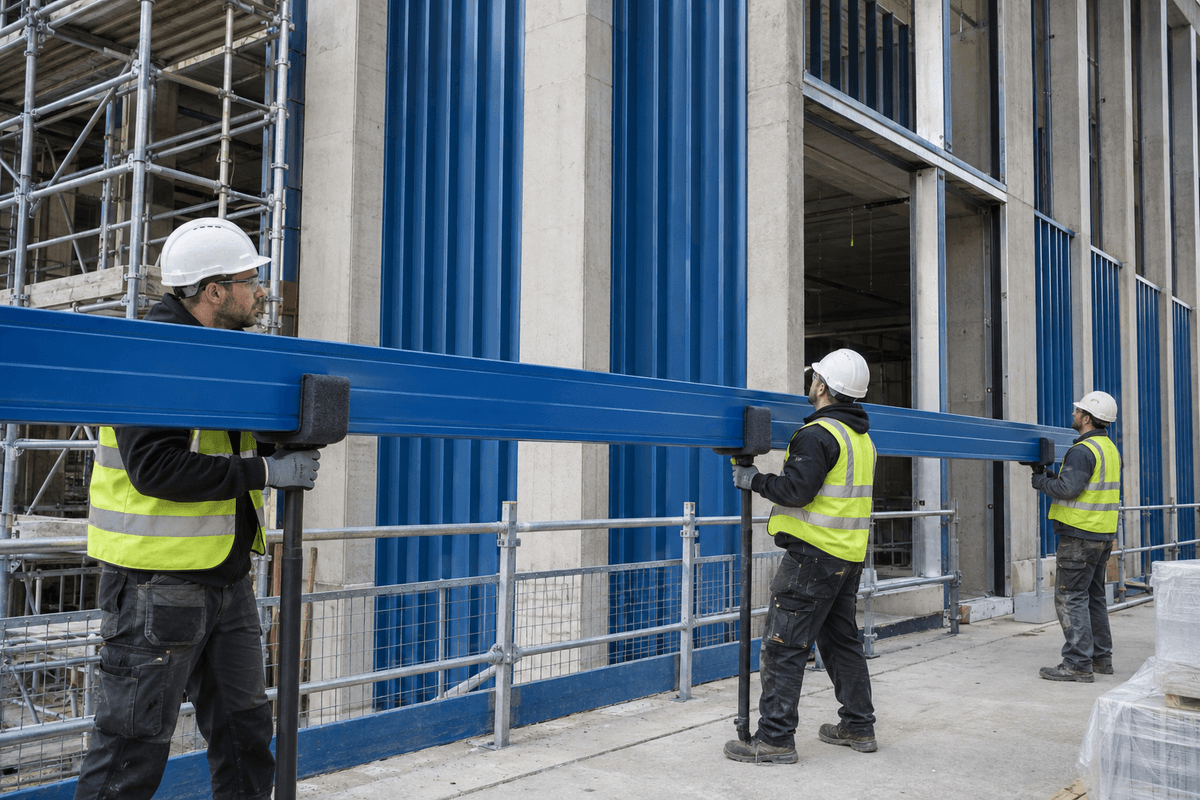
A short blank may be easy to rotate. A long fascia, parapet cap, gutter, or facade trim takes more space and coordination. Each turn creates another opportunity for the visible face to touch a support, for an edge to swing into an obstruction, or for the part to lose its reference position.
Opposing Bends Appear in Common Profiles
Hems, returns, open channels, box shapes, and stepped details frequently combine upward and downward bends. These forms appear around roof perimeters, drainage paths, window openings, and cladding transitions. They are good test pieces for evaluating a double folding workflow.
Fewer Flips Can Improve the Process
- Coated faces have fewer opportunities for contact damage.
- Long parts remain supported and referenced more consistently.
- Operators spend less time coordinating large rotations.
- The work area needs fewer open paths for swinging material.
- Repeated sequences are easier to follow and inspect.
Surface Protection Still Needs a Plan
Reduced flipping does not eliminate the need for clean supports and careful unloading. Protective film, soft contact points, separators, and dedicated staging areas remain important. Inspect the complete part after handling to confirm that the workflow protects the finish.
Look at the Whole Sequence
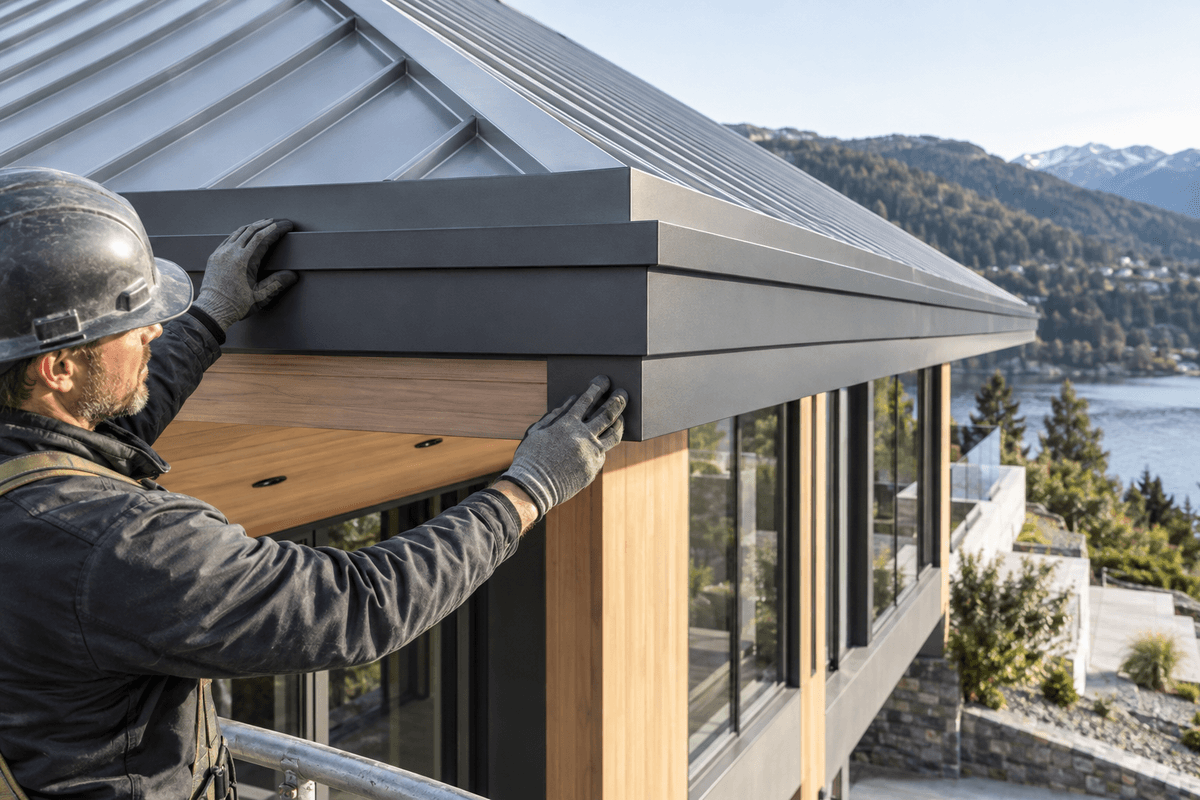
A useful trial begins with loading and ends with a profile placed on padded supports. Watch how the sheet is positioned, how each bend direction is completed, where hands contact the part, and how the finished profile leaves the work area.
Match Control with Movement
ARTITECT describes automatic double folding functions for complex profiles, including dynamic folding, graphic programming, backgauge control, extendable support, and automatic part flipping. The practical question is how these functions work together on the shop's real sequence.
Test an Opposing-Bend Profile
Send a drawing with several bend directions, the material finish, part length, and current handling steps through the ARTITECT double folding application review. Include photographs of any marks or alignment problems from the existing process.
Conclusion
Double folding is valuable because it changes how a profile moves through production. Fewer manual turns can support cleaner surfaces, steadier references, and a more controlled path for long architectural parts.