
CNC metal folding machines are often introduced through control screens and saved programs, but the best systems do more than remember angles. In a roofing or architectural sheet metal shop, CNC becomes valuable when it connects programming to the physical workflow: how the blank is positioned, how bend directions are sequenced, how the machine adjusts to material, and how the operator avoids mistakes during complex profiles.
ARTITECT MACHINERY's automatic double folder is positioned around that broader idea. The company describes itself on its home page as focused on R&D and production of automatic folding machines, while the Functions page lists graphic control EFsys, touch-screen profile programming, automatic folding sequence, collision simulation, CNC material thickness adjustment, dynamic folding, backgauge and material gripper functions, sheet support, side loading, and part flipping. Those are the details that turn CNC from a feature into production control.
CNC Is Not Just a Screen
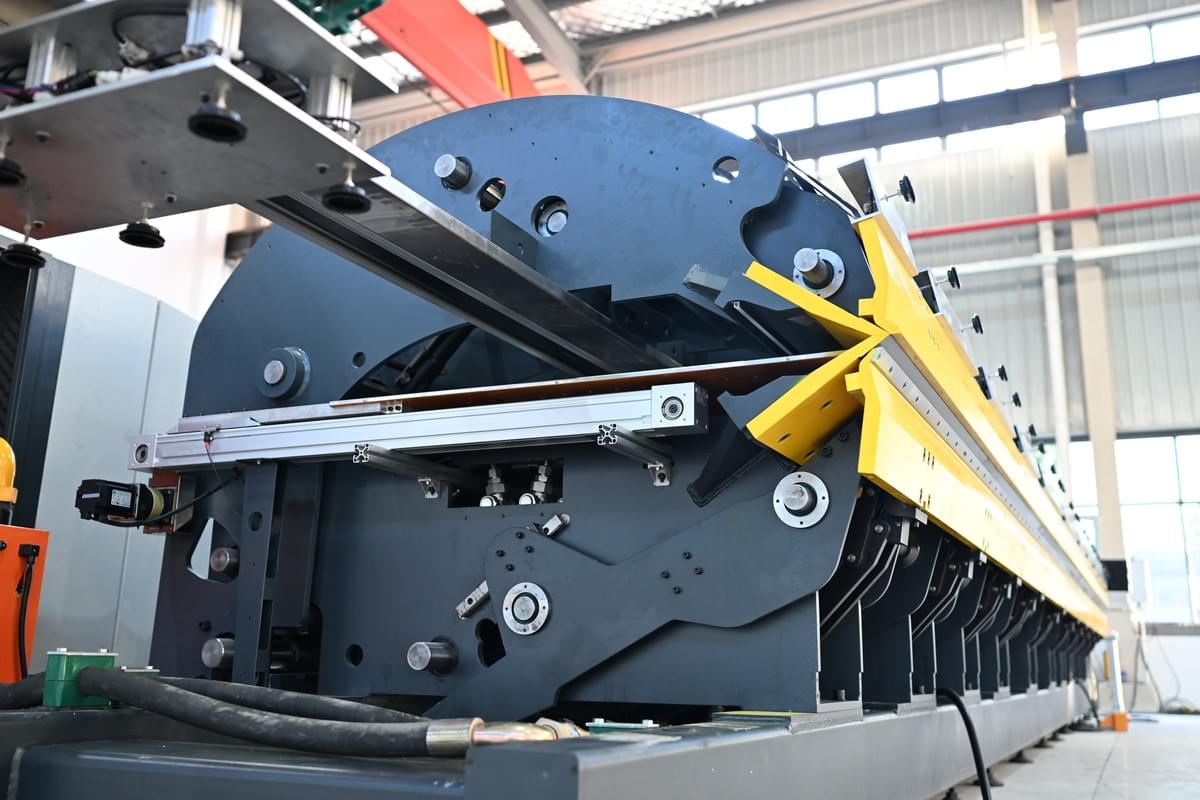
A modern screen is useful only if it simplifies the work around the bend. Operators need to understand the next step, place the blank correctly, trust the sequence, and repeat the part without rebuilding the job from memory. A shop buying a CNC folder should therefore ask how the control system communicates with the machine axes, support devices, backgauge, and material handling features.
This matters most when the shop runs high-mix production. Roofing contractors and architectural fabricators often make many different profiles in smaller batches. The challenge is not only the first part. It is making the second, third, and fiftieth part match without slowing the team down every time a new job appears.
Programming Should Protect the First Good Part
Every shop wants fewer test pieces, fewer wrong bends, and fewer surprises after the blank has already been cut. RAS describes software that can automatically recognize bending lines, create bending sequences, rank alternative strategies, and show 3D simulation. ARTITECT's Functions page also lists touch-screen profile programming, automatic folding sequence, and collision simulation. The common theme is clear: better programming should help the operator see the job before a costly error happens.
For architectural sheet metal, the first good part matters because mistakes waste finished material and production time. A collision, wrong bend direction, or poorly planned rotation can damage the workpiece or force the operator into a difficult recovery step. A stronger CNC workflow reduces those moments by making the sequence visible and repeatable.
Material Thickness Adjustment Belongs in the CNC Conversation

Material thickness affects clamping, bend behavior, and tool clearance. If the machine does not adapt well, operators may compensate manually, and that can produce inconsistent results across materials. ARTITECT lists CNC material thickness adjustment, noting that clamping tooling can be positioned precisely according to the sheet used. Jorns also describes hydraulic material thickness adjustment as automatic adjustment of the air gap between bending and clamping tools.
The practical benefit is consistency. A roofing shop may move between aluminum, coated steel, zinc, copper, or other architectural materials depending on the project. A control-driven adjustment process helps the machine treat thickness as part of the programmed job rather than a separate operator judgment call.
Backgauge Logic Is Where Programming Meets the Blank
The backgauge is one of the most important links between digital programming and physical accuracy. A beautifully programmed sequence is not enough if the blank is placed inconsistently. ARTITECT's backgauge and material gripper functions, along with its tapered backgauge unit, are especially relevant for profile work that depends on repeatable positioning.
Tapered, offset, and non-rectangular details are common in architectural fabrication. A machine that can support those realities gives the shop more freedom. It also helps operators avoid informal workarounds that may be difficult to repeat. CNC value increases when the control can guide how the blank is squared, gripped, and moved through the job.
Dynamic Folding Reduces Waiting Around the Bend
ARTITECT describes dynamic folding as allowing multiple machine axes to move at the same time so repositioning and stop times are reduced. For buyers, this should be understood as a workflow feature, not only a speed claim. The production gain comes from reducing idle moments between actions and making the sequence feel continuous.
On a busy shop floor, small pauses accumulate. Waiting for one axis to finish before another begins, stopping to re-place the part, or manually correcting the blank between bends can all weaken the value of CNC. When dynamic folding is properly integrated, programming and machine motion work together to remove some of that lost time.
Double Folder Control Helps with Bend Direction
Many metal folding jobs become harder when the bend direction changes. A conventional workflow may require the operator to flip or re-orient the blank. RAS notes that up and down bending can avoid material flipping when the direction changes, while supporting automatic folding sequences. For CNC metal folding machines, this is a major reason to evaluate double folder architecture.
Up/down folding is especially useful for profiles with hems, returns, offsets, and box-like geometry. The control system can only deliver its full value when the machine architecture can execute the planned sequence without forcing excessive manual movement. In other words, CNC programming and double folder mechanics are strongest when they are designed as one workflow.
What Buyers Should Ask During a Control Demo
The best control demonstration is not a quick tour of menus. It is a production walk-through using representative parts. Buyers should ask the supplier to create or load a profile, show the bend sequence, explain the operator prompts, demonstrate thickness adjustment, and show how the machine handles a bend-direction change.
- Can the operator understand the sequence without relying on memory?
- Does the software warn about collisions or difficult rotations?
- How are material thickness and tooling position handled?
- Can the backgauge support tapered or offset profile requirements?
- How much manual movement remains when bend direction changes?
- Can saved jobs be recalled quickly for repeat work?
Training and Shop Consistency
Good CNC control reduces dependence on one expert operator. It does not remove the need for skill, but it gives more people a structured way to run the work correctly. That matters as shops grow, train new employees, or try to run more shifts without losing quality. A machine that guides setup and sequence can protect consistency when production pressure rises.
OSHA's machine guarding guidance also reminds buyers that moving machine parts and hazardous processes need appropriate safeguards. Control quality and safety planning should be discussed together because operators are interacting with a programmed sequence around moving beams, clamps, gauges, and long material. Clear prompts, safe access, and predictable machine behavior all support a more controlled workplace.
Where ARTITECT MACHINERY Fits
ARTITECT MACHINERY's strongest fit is for buyers who want CNC to control a practical double folder workflow rather than simply store bend data. The company's About Us page presents its automatic folding machine as shaped by production experience and architectural design experience. That is relevant because architectural sheet metal work depends on both mechanical repeatability and design flexibility.
A buyer evaluating CNC metal folding machines should speak with ARTITECT about actual profile families: roofing trims, cladding details, parapet caps, long edge components, and custom architectural shapes. The right conversation through the contact page should connect software, gauging, dynamic motion, sheet support, and part flipping to the shop's daily mix of work.
Conclusion
CNC metal folding machines should be evaluated as production systems. The control screen matters, but it is only one part of the answer. Real value comes when programming supports collision awareness, thickness adjustment, backgauge positioning, bend-direction planning, and operator confidence on repeat work.
For roofing and architectural shops, the strongest buying question is simple: does the CNC system make the whole folding workflow more predictable? If the answer includes better support, fewer manual moves, clearer sequencing, and stronger repeatability, the machine is doing more than bending metal. It is controlling production.