
Automated folding machines are often demonstrated with a single profile running smoothly. A roofing or architectural sheet metal shop sees the real value when the next job is different: another material, another thickness, a new visible face, and a shorter batch.
ARTITECT MACHINERY describes automatic sequence control, material support, thickness adjustment, and part handling in its automatic double folder function guide. These features are most useful when they reduce uncertainty across a changing production schedule.
Measure the Time Between Good Parts
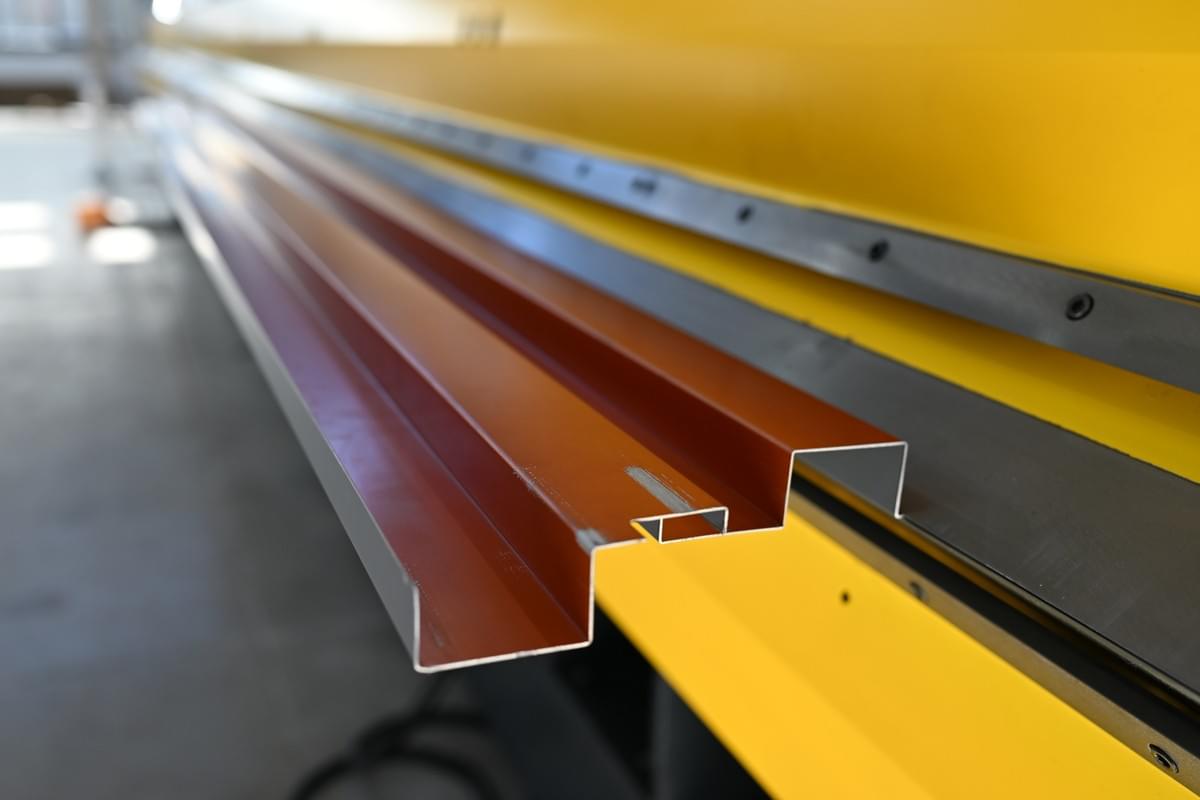
Cycle time alone misses programming, material verification, first-part inspection, and unloading. Track the interval from the last accepted part of one job to the first accepted part of the next. That measure reveals whether automation supports mixed work.
Keep Job Data Complete
- Use clear profile names and revision numbers.
- Record material, thickness, coating, and visible face.
- Identify critical dimensions and inspection points.
- Store approved settings with the correct drawing.
- Separate trial programs from released production jobs.
Support Still Matters
Automation does not remove the physical behavior of long sheet. Stable support and a clear part route help prevent twist, dragging, and surface damage. Operators also need a defined place for accepted profiles and parts awaiting inspection.
Test a Mixed-Job Sequence
A useful trial might move from white fascia to charcoal coping and then to a short gutter detail. Review setup decisions, operator input, first-part quality, and how quickly the team returns to a previous job.
Bring Production Data to the Discussion
Send representative drawings, batch sizes, and material notes through the ARTITECT mixed-production consultation. The ARTITECT automatic folding overview provides additional context for roofing and architectural applications.
Conclusion
Automation should make repeated jobs easier to recall and different jobs easier to start. The strongest evaluation follows several real profiles through setup, forming, inspection, and staging.