
A roof trim drawing can specify the finished profile without giving the fabrication team enough information to run a useful folding trial. Two blanks that look similar may arrive with different finishes, surface protection or processing instructions. For a zinc sheet metal project, establish the material and the visible-face requirements before asking a supplier to demonstrate a folding machine.
Start with the actual material specification and a representative trim profile. If the building documents describe a zinc-coated steel product, record that description exactly. If they specify an architectural zinc sheet, identify the product and supplier instructions. A material name on its own is too broad for a tooling, finish or machine acceptance decision.
Bring the zinc sheet metal specification with the drawing
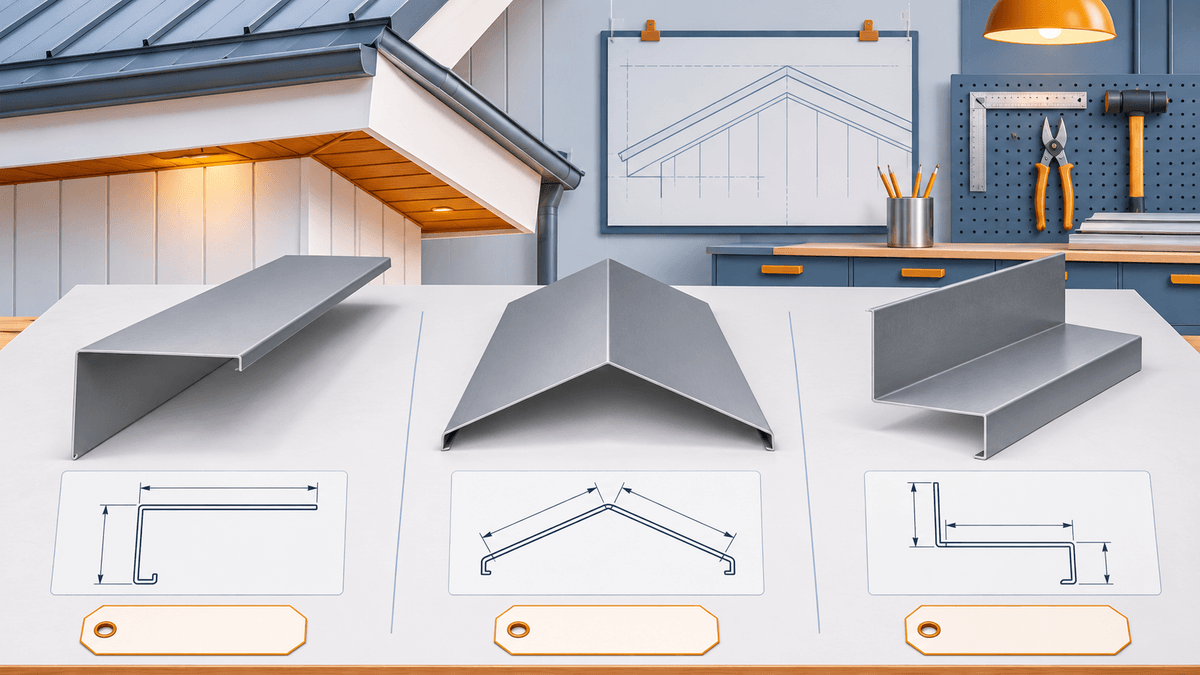
Concept illustration. Pair each zinc sheet metal sample with its drawing and material record.
A useful zinc sheet metal record identifies the supplier, product, nominal thickness, finish and any handling instructions that apply to the blank. Include the lot or reference number if available. If the shop will receive more than one finish or thickness for the project, identify which combination the trial represents. Keep the sample label with the finished piece so the trial can be reproduced later.
Record how the supplied sheet is protected and how the material supplier expects that protection to be handled. Use the supplier's instructions to decide whether protective film stays in place during the relevant operation. Do not transfer a handling rule from another metal or finish without checking. If a shop makes its own protective arrangements, note those arrangements separately so the buyer can see what was tested.
For a zinc sheet metal trial, the material record also helps when an unexpected mark appears. The fabricator can compare the original blank with the sample and identify what changed after loading, positioning, folding or unloading. Photographing the blank before the run can make that comparison much easier.
Identify the visible face of the zinc sheet metal trim
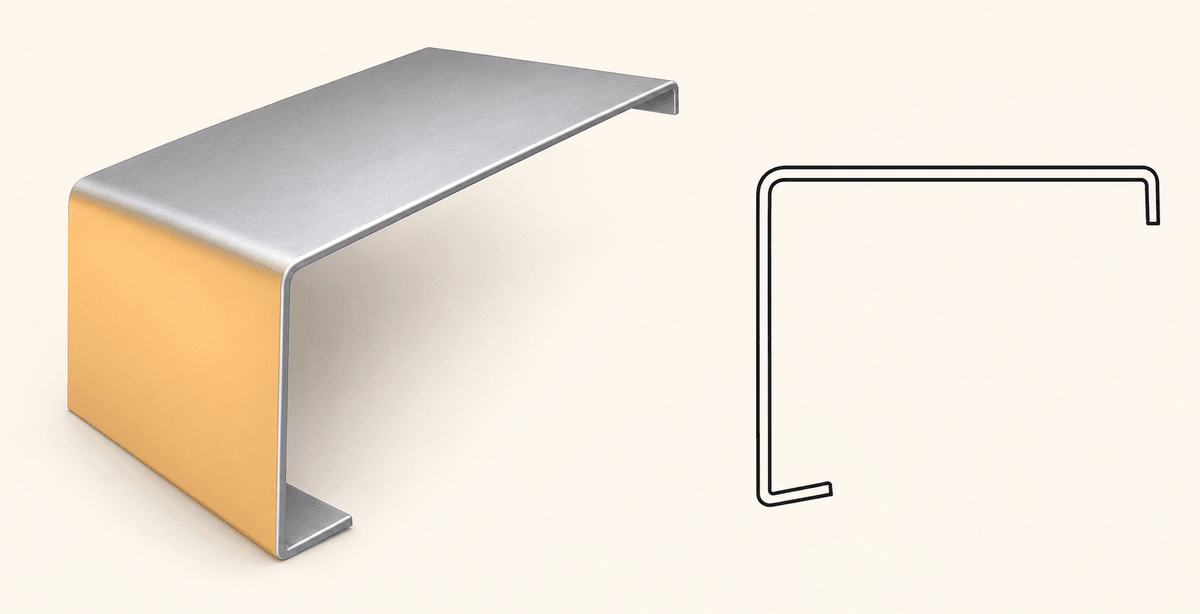
Concept illustration. Mark the exposed face on the zinc sheet metal sample and its drawing.
Mark the visible face of the zinc sheet metal on the drawing or on a separate orientation diagram. Show where the part will sit when it is installed, including the edges that line up with adjacent trim or cladding. The way the sample looks on a bench may not tell you whether a small surface mark will be noticeable on the building.
Agree on the conditions for reviewing appearance. Decide whether the finish should be checked before and after the protective layer is removed, subject to supplier instructions. Review the sample in consistent light and from the angle that best represents the visible face. If the project has its own appearance standard, use that requirement and record any question for the specifier.
Ask the demonstration team to show how the blank is handled between operations. Long or narrow profiles may be exposed to contact at more than one stage. Watch where the material rests during loading, how it is positioned for the next fold and how the operator removes it from the machine. The purpose is to identify the contact point associated with any visible change, so that a second trial can isolate it.
Choose a zinc sheet metal sample that represents the tightest detail
Select a roof detail that includes the shortest relevant return, the longest representative length or the edge that needs the most consistent fit. A short and simple profile can establish the basic handling sequence. A second sample should show what changes when the part is longer, more visible or harder to position. Include the actual material specified for that condition.
Identify the important dimensions on the drawing and agree on how to measure them before the run. Measure flange depth at the locations that matter for fit. If long pieces will meet at a visible joint, inspect that fit using representative adjacent parts or a documented gauge. For a return or overlap, use a sample that represents how it will be installed. Keep the drawings and photographs with the measurements.
If the zinc sheet metal supplier defines limits or procedures relevant to the forming operation, give those instructions to the demonstration team before programming the trial. The machine trial is where the fabricator verifies how the proposed equipment handles the specified material and shape. Any supplier requirements still apply.
Check handling and tooling on the proposed machine
ARTITECT's machine functions page describes CNC material thickness adjustment, a backgauge and gripper system, and support functions for its automatic double folding equipment. Those capabilities provide a basis for discussing the proposed setup. Ask which configuration and tooling will be used for your sample. Then record what was installed and what the test showed.
Watch how the machine and operator maintain orientation. A return on the wrong face can leave the outline looking plausible even when the piece does not fit the roof detail. Mark an orientation reference on the sample record and compare it after each representative fold. If the team changes the sequence, rerun the relevant piece and identify the revised program in the record.
Check clearance on the entire part. The end of a previously formed return can move close to the tooling as another flange is formed. Ask the supplier to demonstrate the shape through its complete sequence and explain what setup is needed to keep it clear. If special support or tooling is required, record whether it is included with the proposed equipment.
Record the result so another person can repeat it
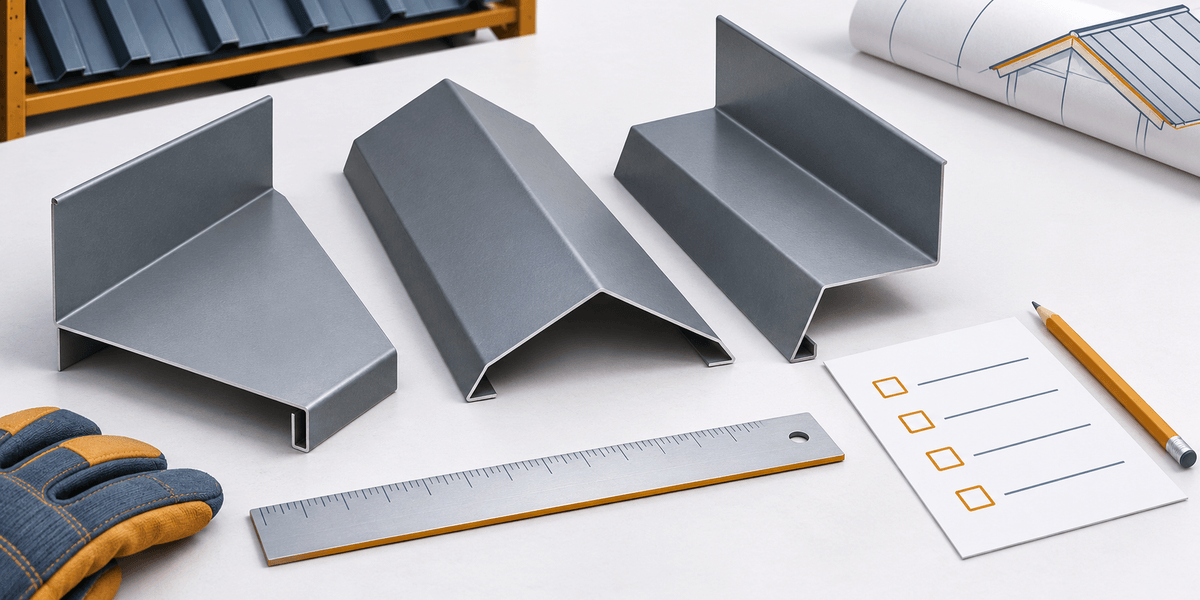
Concept illustration. Keep sample geometry and inspection observations together.
Keep a short record for each zinc sheet metal sample. Include the material reference, profile drawing, orientation, equipment configuration, measurements and finish observations. Record the program revision if the supplier makes changes. If a dimension or finish differs from the requirement, describe the difference before adjusting multiple settings. A clear observation makes the retest more useful.
For a production decision, compare a small group of pieces under the same conditions. Record whether variation appeared between the first piece and the later ones, and whether the appearance changed after repeated handling. If the trial used a different length or finish from the project specification, say which result still needs a representative sample before acceptance.
For a zinc sheet metal roof detail or trim trial, include the profile, material reference, visible-face requirements, measurements you plan to check and any supplier handling instructions. That gives the demonstration team a practical basis for selecting the blank, tooling and sequence.