
- A distributor should own defined project tasks, not just introductions.
- Use your drawings and material in the application review.
- Put installation, training, parts, and escalation duties in writing.
Local presence is useful, but it is not a support plan. A sheet metal folding equipment distributor must reduce risk between the factory, your shop, and weekly production.
What should the distributor know about your parts?
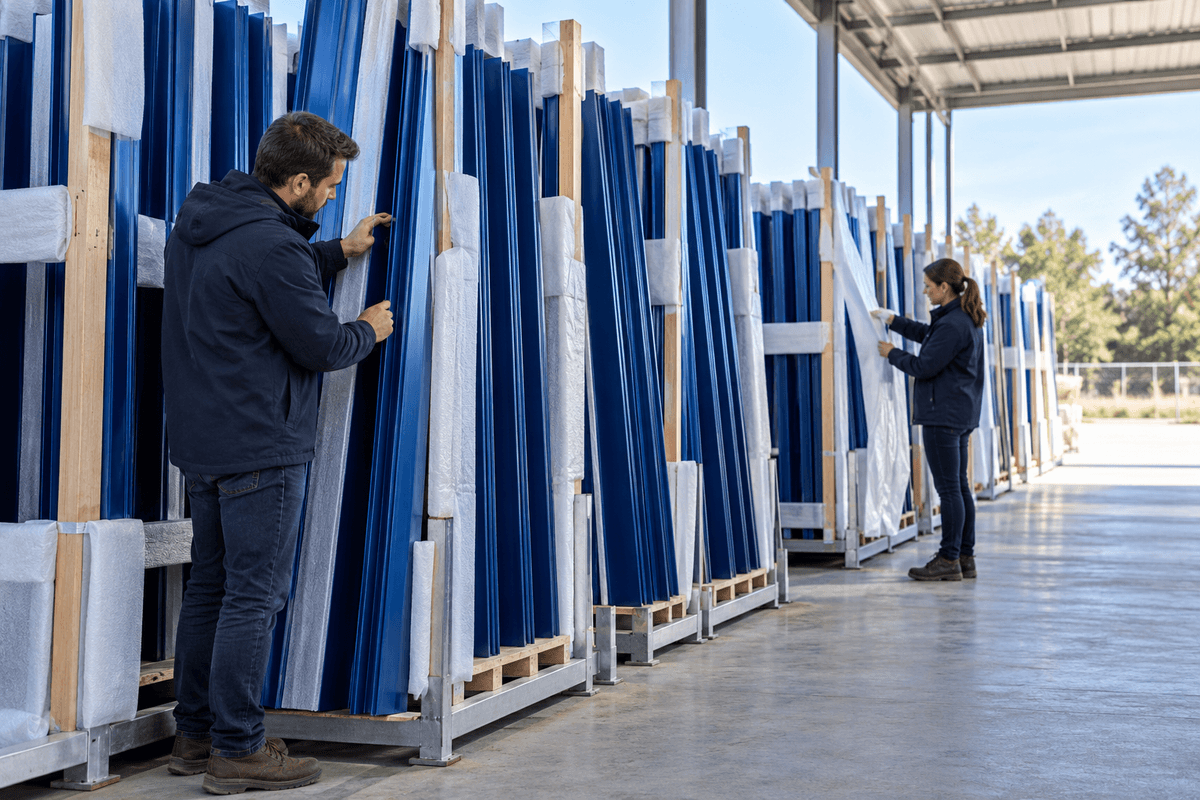
The distributor should understand material, thickness, finish, length, bend direction, volume, and mating details. Send fascia, coping, gutters, window surrounds, and difficult remakes.
Who owns installation and acceptance?
Ownership should be explicit for site surveys, utilities, delivery, positioning, commissioning, training, and acceptance. The distributor may perform some work and coordinate the manufacturer for other tasks.
How do you test support before buying?
Test support by asking a specific application question and following the response. Note who answers, what information they request, whether the answer is documented, and how factory engineering becomes involved.
Which published numbers deserve a closer look?
| Published figure | What it describes | Source |
|---|---|---|
| 10 years | Parts-supply commitment published by one US supplier | KNUTH, accessed 2026 |
| 35° | ARTITECT published tool angle | ARTITECT, 2026 |
| 72 dB | ARTITECT published hydraulic operating level | ARTITECT, 2026 |
Use these figures as comparison inputs, then confirm the current specification and test method with the supplier.
Where can you verify the supplier?
Compare ARTITECT's double-folder overview with its published functions, engineering background, and application articles. Then send real drawings through the profile-review form.
What are shops asking before they commit?
Should I buy direct or through a distributor?
Choose the route with clear application, installation, and support ownership. A distributor can add local coordination and service capacity, while direct factory access can shorten technical communication.
What should I ask during a demo?
Ask to run your material and difficult profiles, measure consecutive parts, review changeover steps, and assemble mating details. Also ask who prepared the program and who will support it later.
How can I verify service coverage?
Request the service address, technician locations, normal escalation route, travel terms, remote-support method, and parts process in writing. Do not infer coverage from the word local.
What training should be included?
Separate operator, programming, maintenance, and supervisor training. List the expected hours, class size, materials, profiles, and deliverables for each group.
What information should I send first?
Send drawings, material specifications, annual part mix, longest blanks, floor plan, utilities, receiving limits, and current bottlenecks. That package lets the distributor test fit early and reduces the chance that important scope appears only after the order.
What should you send for a useful application review?
Send the drawing, material, measured thickness, finish, longest blank, mating details, and the defect you want to remove. Ask for a sample plan with measurable acceptance criteria.