
An automatic sheet folding machine should be reviewed through repeat profiles, not a single formed sample. Roof and facade shops need parts that match across a project: fascia lengths, coping caps, gutter sections, reveal trim, and custom returns.
ARTITECT MACHINERY's double folder factory overview and automatic sheet folding function guide describe workflow features that matter when shops care about repeatability, support, and clear production sequences.
Automation Should Make the Second Part Match the First
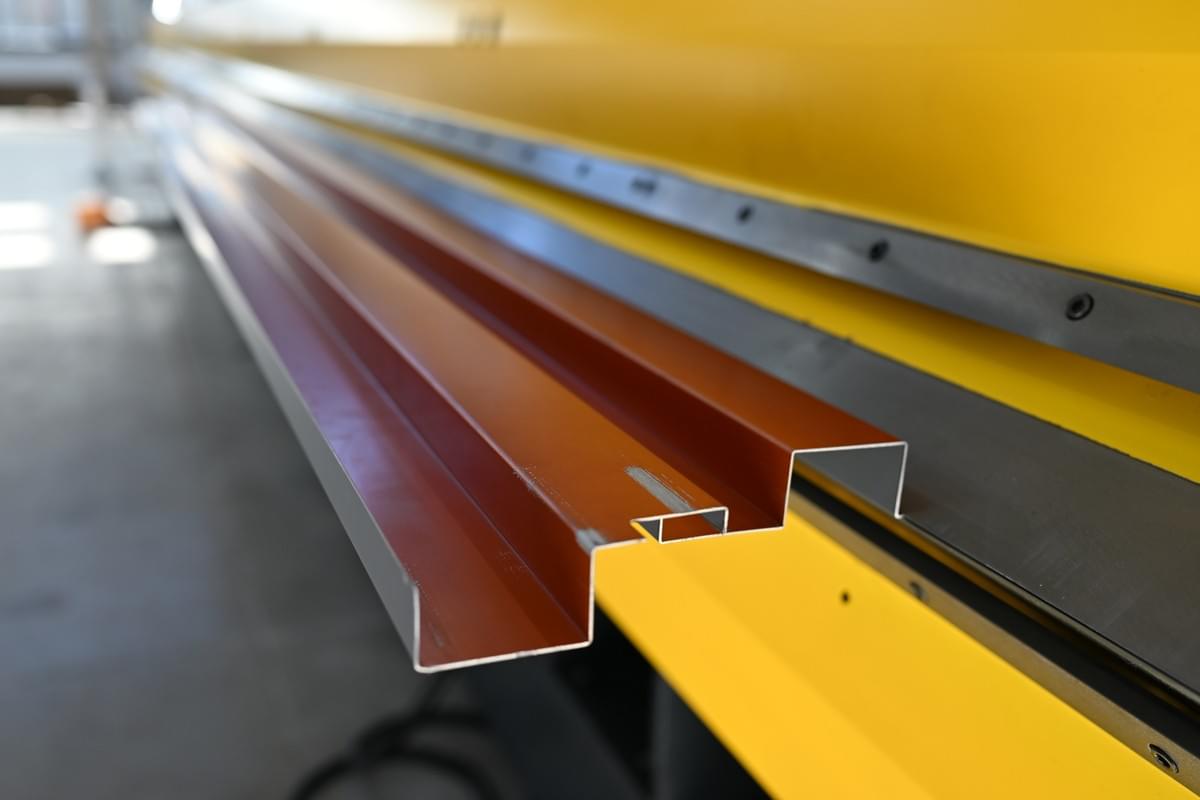
The value of automatic folding appears when profiles repeat cleanly. If the first part is good but the fourth and fifth drift, the workflow still needs attention.
What to Compare in a Short Run
- Flange length across repeated parts.
- Visible face quality on coated material.
- Straightness of long fascia or gutter profiles.
- Corner fit on coping and trim returns.
- Part grouping for delivery and installation.
Support Helps Repeatability
Long sheet metal profiles need stable support so the operator is not fighting the part during each step. Better support can reduce twist, surface marks, and inconsistent positioning.
Use the Jobsite as the Standard

Inspect profiles in the orientation they will be installed. A reveal should line up with panels. A gutter should hold its drainage geometry. A fascia should read straight along the building edge.
Share Repeat-Part Requirements
Send repeated profile drawings, quantity ranges, material thicknesses, finish notes, and installation photos through the ARTITECT repeat profile consultation form. Repeatability is easier to discuss when the full set is visible.
Conclusion
An automatic sheet folding machine should help a shop make matching profiles with less strain and fewer avoidable corrections. For architectural work, repeatability is proven by the project set, not by one sample.